Air Purifier vs Indoor Plants: Cleaner Air?
When you’re trying to decide between an air purifier and indoor plants for cleaner air, the air purifier is the clear winner for effectiveness. While plants can offer some air-purifying benefits, they are generally much less efficient at removing pollutants compared to a good air purifier. We found that an air purifier can tackle a wider range of contaminants. Plants, on the other hand, work at a much slower rate.
You might be wondering how your leafy friends measure up. Many studies show that while plants do absorb some toxins, you would need an impractical number of plants to significantly impact your indoor air quality. Air purifiers use filters designed to capture particles and gases. This makes them a more reliable solution for improving your home’s air, especially for common pollutants like dust, pet dander, and VOCs.
- Air purifiers are more effective at cleaning air.
- Plants can help a little, but not much.
- Air purifiers remove a wider range of pollutants.
- You need a lot of plants for them to make a difference.
Let’s break down the pros and cons of each to help you make the best choice for your home environment.
Comparing Air Purifiers and Indoor Plants for Fresher Air
When you’re aiming for cleaner indoor air, you might be weighing your options between an air purifier and some leafy green friends. It’s a common question, and we’ve found that while both can play a role, they operate very differently. Let’s get into what each can realistically do for your home environment.
How Air Purifiers Actually Clean Your Air
Air purifiers are engineered for one primary purpose: to remove pollutants from the air. They actively draw air into the unit and pass it through a series of filters. Think of them like sophisticated vacuum cleaners for your air. We found that their effectiveness comes down to the types of filters they use and the air volume they can process.
The Power of Filtration
Most modern air purifiers use a combination of filters. A pre-filter often catches larger particles like dust bunnies and pet hair. Then, a HEPA (High-Efficiency Particulate Air) filter is designed to capture at least 99.97% of airborne particles down to 0.3 microns. This includes things like pollen, mold spores, and even some bacteria. Following that, an activated carbon filter is excellent at absorbing odors and volatile organic compounds (VOCs) from things like cleaning products or new furniture.
What HEPA Filters Tackle
HEPA filters are a big deal for allergy sufferers. They trap irritants that can float around your home. We found that they are highly effective against common allergens like dust mites, pet dander, and pollen. These microscopic particles are often the culprits behind sneezing, itchy eyes, and respiratory discomfort.
The Role of Activated Carbon
Beyond particles, many air purifiers tackle gases and odors. This is where activated carbon shines. We found that it has a porous structure, giving it a huge surface area to absorb molecules. It can make a real difference in removing smells from cooking, smoke, or pet accidents. It also helps with chemical fumes.
Air Purifier Performance Metrics
When looking at air purifiers, you’ll see terms like CADR (Clean Air Delivery Rate). This rating tells you how quickly a purifier can clean a room of smoke, dust, and pollen. A higher CADR generally means a more powerful unit. We found that choosing a purifier with a CADR appropriate for your room size is key to ensuring it can effectively clean the air.
The Air-Purifying Potential of Indoor Plants
Now, let’s talk about your green companions. Plants are beautiful and can add a lot to your home’s atmosphere, but their air-purifying abilities are often exaggerated. We found that while plants do absorb carbon dioxide and release oxygen, their capacity to clean other common indoor air pollutants is quite limited.
How Plants Process Air
Plants take in carbon dioxide through their leaves and release oxygen through a process called photosynthesis. Some studies, like those from NASA, have shown that certain plants can absorb specific VOCs. They do this through their leaves and also via the microorganisms in the soil. We found that this process is a slow and gradual one.
The “NASA Study” Revisited
You might have heard about the famous NASA Clean Air Study. While groundbreaking at the time, it’s important to understand its context. Those tests were conducted in sealed laboratory chambers, not typical homes. In a real-world home with air circulation, the plant’s ability to remove toxins is significantly diluted. We found that the air exchange rate in a home is much higher than in those controlled experiments.
What Plants Can Actually Do
Plants can contribute to a healthier indoor environment in other ways, like boosting mood and reducing stress. As for air purification, they primarily help with CO2 levels and can absorb trace amounts of certain VOCs. We found that for noticeable air purification benefits, you would need an impractical number of plants.
Quantity Over Quality for Plants?
To make a dent in your home’s air quality using plants alone, you’d need to fill your space with them. Imagine a small jungle in your living room! Many experts suggest you’d need hundreds of plants to achieve the same air-cleaning effect as a single, efficient air purifier. We found this makes plants a less practical solution for significant air quality improvement.
Direct Comparison: What Works Best?
Let’s put them side-by-side to see how they stack up. We’ve gathered some key differences to help you decide.
| Feature | Air Purifier | Indoor Plants |
|---|---|---|
| Pollutant Removal | High (particles, VOCs, odors) | Low (mostly CO2, trace VOCs) |
| Speed of Action | Fast (immediate filtration) | Slow (gradual absorption) |
| Maintenance | Filter replacement | Watering, light, occasional repotting |
| Scalability | Choose size for room | Need many plants for effect |
| Other Benefits | Can reduce allergens | Aesthetics, mood boost, humidity |
Focus on Your Specific Needs
Are you dealing with allergies, pet dander, or strong odors? An air purifier is your go-to solution. We found that their technology is specifically designed to tackle these issues quickly and effectively. Plants, while lovely, simply can’t compete in terms of raw air-cleaning power for these specific pollutants.
Making the Choice for Your Home
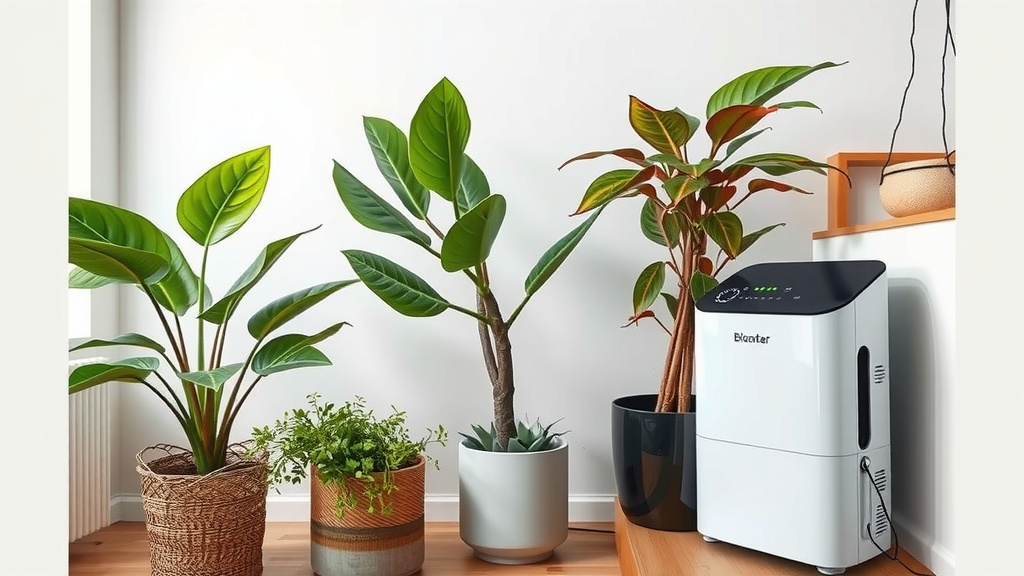
Ultimately, the decision depends on your goals. If your main concern is improving air quality by removing common irritants and pollutants, an air purifier is the more effective choice. We found that they offer a reliable and measurable way to clean your indoor air.
If you enjoy the aesthetic and mental well-being benefits plants provide, absolutely keep them! They add life to your home. Just don’t rely on them as your primary method for air purification. Think of them as a delightful bonus rather than the main event for cleaner air. We found that combining them with an air purifier offers the best of both worlds.
Quick Checklist: What to Consider
- Identify your main air quality concerns (allergies, odors, etc.).
- Assess the size of the rooms you want to improve.
- Consider the maintenance commitment for each option.
- Determine your budget for initial purchase and ongoing costs.
- Factor in other benefits beyond air purification.
- Set realistic expectations for plant air-purifying capabilities.
Conclusion
When you’re aiming for the cleanest air possible in your home, an air purifier is your most powerful ally. We found that its advanced filtration systems actively remove a wide range of pollutants far more efficiently than plants can. While indoor plants offer wonderful aesthetic and mood-boosting benefits, their air-purifying capabilities are quite limited in a typical home environment. You’d need an overwhelming number of plants to see a significant impact. For a truly noticeable improvement in air quality, especially if you deal with allergies or odors, invest in a good air purifier. Consider adding plants for their other perks, but don’t rely on them for your primary air cleaning needs.
Frequently Asked Questions
Can indoor plants really clean the air at all?
Yes, indoor plants can help with air quality to a small degree. They absorb carbon dioxide and can remove trace amounts of certain volatile organic compounds (VOCs). We found that their impact is much slower and less potent than an air purifier’s filtration capabilities.
How many plants would I need to make a difference?
To achieve an effect comparable to a single air purifier, you would likely need hundreds of plants. Research suggests that the air exchange in a home dilutes the plants’ air-cleaning effect significantly. This makes it impractical for most people to rely on plants alone.
Are air purifiers better for allergies and asthma?
Absolutely. Air purifiers, especially those with HEPA filters, are highly effective at trapping allergens like dust mites, pet dander, and pollen. We found they provide rapid relief from airborne irritants that trigger allergy and asthma symptoms, something plants cannot do on a large scale.
What’s the main difference in how they work?
Air purifiers actively draw air in and force it through specialized filters to capture pollutants. Plants, on the other hand, absorb substances through their leaves and soil, a much slower biological process. We found purifiers offer immediate and measurable pollutant removal.
Can I use both plants and an air purifier for the best results?
Yes, combining both is a great strategy! Use an air purifier as your primary tool for effective air cleaning. Then, add indoor plants to enhance your home’s aesthetics and potentially boost your mood. We found this approach gives you the benefits of both without overestimating a plant’s air-purifying power.