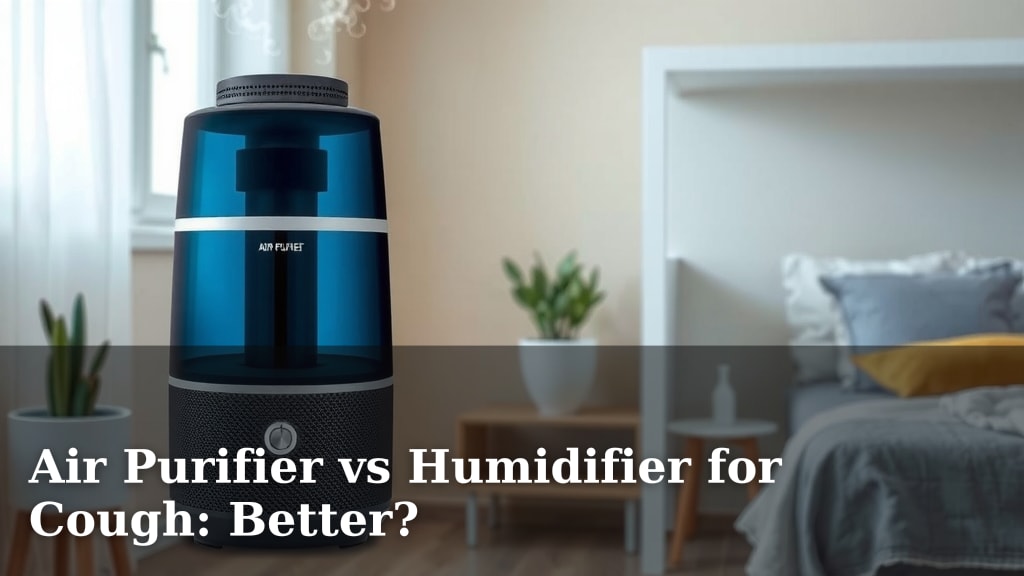
Air Purifier vs Humidifier for Cough: Better?
When dealing with a cough, an air purifier is generally more helpful than a humidifier. Air purifiers remove irritants like dust and allergens that can trigger or worsen a cough. While humidifiers add moisture to the air, which can soothe a sore throat, they don’t address the root cause of many coughs.
Understanding the difference is key to finding relief. Your cough might be caused by something in the air, making an air purifier the primary solution. If dry air is the culprit, a humidifier could offer some comfort, but it’s usually not enough on its own for a persistent cough.
TL;DR:
- Air purifiers are usually better for coughs.
- They remove cough-triggering irritants like dust.
- Humidifiers add moisture, which can soothe but not always fix a cough.
- Consider an air purifier first for lasting relief.
- Dry air can worsen coughs, making humidifiers helpful for comfort.
So, let’s break down exactly when and why you’d reach for an air purifier over a humidifier for your cough.
“`htmlAir Purifier vs. Humidifier: Which Helps Your Cough More?
When a cough just won’t quit, you might be wondering what’s the best tool for the job. You’ve probably heard about both air purifiers and humidifiers. Let’s get straight to the point: an air purifier is often your best bet for tackling a cough.
Think of it this way: your cough is a signal that something is bothering your airways. An air purifier works to remove the troublemakers that could be causing that irritation. A humidifier adds moisture, which feels nice, but it doesn’t remove the root cause.
So, while both devices have their place, they work in very different ways. We’ll break down how each one can help (or not help) your cough so you can make the best choice for your health.
How Air Purifiers Tackle Coughs
Air purifiers are designed to clean the air you breathe. They do this by drawing in air and passing it through a series of filters. These filters trap tiny particles that can irritate your lungs and throat, leading to a cough.
What Air Purifiers Remove
Imagine your air is a busy street. An air purifier is like a street sweeper, clearing out all the unwanted debris. This includes things like:
- Dust mites: Tiny creatures living in your home that can trigger allergies.
- Pollen: Tiny grains from plants that often cause seasonal allergy symptoms, including coughs.
- Pet dander: Microscopic skin flakes shed by pets.
- Mold spores: Fungi that can grow in damp areas and affect air quality.
- Smoke particles: From cooking, fireplaces, or even tobacco.
- Volatile Organic Compounds (VOCs): Chemicals released from cleaning products, furniture, and paints.
When these irritants are floating around, they can easily get into your airways. This triggers inflammation and that persistent, nagging cough. By removing them, an air purifier reduces the triggers causing your cough.
When an Air Purifier is Your Champion
You’ll find an air purifier especially helpful if your cough is linked to:
- Allergies: If you sneeze, your eyes water, and you cough, allergens are likely suspects.
- Asthma: Many people with asthma find their cough worsens with certain airborne irritants.
- Environmental factors: Living near a busy road or in an area with poor air quality can contribute.
- Irritants at home: Strong scents from cleaning supplies or new furniture can be culprits.
A HEPA filter is key here. Most good air purifiers use HEPA (High-Efficiency Particulate Air) filters, which are proven to capture 99.97% of particles 0.3 microns in size. This is incredibly fine stuff you can’t even see!
Understanding Humidifiers and Your Cough
Humidifiers do one main thing: they add moisture to the air. They work by releasing water vapor into your room. This can make the air feel more comfortable, especially during dry seasons or in heated homes.
How Moisture Can Help (Sometimes)
When the air is too dry, it can dry out your nasal passages and throat. This can lead to:
- A scratchy, sore throat.
- Thicker mucus that’s harder to clear.
- Irritation that makes you cough.
In these specific cases, a humidifier can offer some relief. By adding moisture, it can help soothe that dry, scratchy feeling and make it easier for your body to clear mucus. This can make a cough feel less irritating.
When Humidifiers Fall Short
However, humidifiers don’t *remove* anything from the air. If your cough is caused by allergens, dust, or other irritants, adding more moisture won’t solve the problem. In fact, if not cleaned properly, humidifiers can become a breeding ground for mold and bacteria.
These microscopic foes can then be released into the air, potentially making your cough worse. It’s a bit like trying to water a plant that’s being eaten by bugs – the water might help the plant temporarily, but it doesn’t deal with the pest problem.
Many health organizations suggest keeping indoor humidity levels between 30% and 50% (CDC). Too much humidity can encourage dust mites and mold, while too little can dry you out.
Air Purifier vs. Humidifier: A Quick Comparison
Let’s look at the core differences in a simple chart to help you see it clearly.
| Feature | Air Purifier | Humidifier |
|---|---|---|
| Primary Function | Removes airborne particles and irritants. | Adds moisture to the air. |
| Helps with Coughs Caused By: | Allergies, asthma, dust, smoke, dander, mold spores. | Dry air, dry throat, thick mucus. |
| Potential Downsides | Requires filter replacement. Can be noisy. | Needs regular cleaning to prevent mold/bacteria. Can over-humidify. |
| Best For: | Addressing the root cause of irritant-driven coughs. | Providing comfort for dry air symptoms. |
Choosing the Right Device for Your Cough
So, how do you decide? Ask yourself: what’s triggering my cough?
When to Choose an Air Purifier First
If you suspect dust, pet dander, pollen, or smoke is making you cough, start with an air purifier. It directly addresses the source of the irritation. For many people, this means significant relief from persistent coughs.
When a Humidifier Might Be a Good Addition
If your cough is often worse in a dry room, or you wake up with a sore throat, a humidifier might offer comfort. However, it’s often best used in conjunction with an air purifier, not as a standalone solution for most coughs.
Can You Use Both?
Yes, in many cases, using both an air purifier and a humidifier can be beneficial. The air purifier tackles the irritants, and the humidifier provides soothing moisture, especially if dry air is also a factor. Just be sure to keep both devices clean!
Simple Steps to Better Air Quality for Your Cough
Ready to breathe easier? Here’s a quick checklist to help you:
- Assess your symptoms: Does your cough get worse with dust, pets, or in dry air?
- Consider an air purifier: Especially if allergies or irritants are likely culprits. Look for a HEPA filter.
- Maintain proper humidity: If air is dry, use a humidifier but clean it often. Aim for 30-50% humidity.
- Keep things clean: Regular dusting and vacuuming reduce airborne particles.
- Ventilate your home: Open windows when outdoor air quality is good.
- Consult a doctor: If your cough is severe or lasts a long time.
Conclusion
When you’re battling a cough, understanding the tools that can help is key. We found that an air purifier is generally your first line of defense. It tackles the root cause by removing irritants like dust, pollen, and dander that often trigger coughs.
While a humidifier can offer soothing comfort by adding moisture, it doesn’t clean your air. Think of it as a nice addition for dry environments, but not a primary solution for irritant-driven coughs. To breathe easiest, consider starting with an air purifier and adding a humidifier if dry air is also an issue.
Frequently Asked Questions
Can an air purifier cure a cough?
An air purifier can’t cure a cough directly, but it can significantly reduce cough symptoms. By removing allergens and irritants from the air, it helps prevent your airways from becoming inflamed and irritated. This can lead to fewer coughing fits and faster recovery.
When is a humidifier better than an air purifier for a cough?
A humidifier might be more helpful if your cough is specifically caused by very dry air. Dry air can irritate your throat and make mucus thick, leading to a cough. In this scenario, adding moisture can offer relief and make coughing less painful.
Can I use an air purifier and humidifier at the same time?
Yes, you can often use both devices together for maximum benefit. The air purifier will clean the air of irritants, while the humidifier will keep the air comfortably moist. This combination can be very effective, especially if you suffer from allergies and dry air.
How often should I clean or replace filters for my air purifier and humidifier?
This depends on the model, but generally, humidifier tanks need daily rinsing and weekly cleaning. Air purifier filters, especially HEPA filters, typically need replacing every 6 to 12 months. Always check your device’s manual for specific recommendations.
Will an air purifier help if my cough is from a cold or flu?
An air purifier can help ease cough symptoms associated with colds or the flu. While it won’t eliminate the virus, it can remove airborne particles like dust and dander that might exacerbate your cough or irritate your throat further, providing some comfort during your illness.