Ionizer vs HEPA Air Purifier: Which One Should You Choose for Your Home?
If you’ve ever walked into a room and felt that something was off with the air quality, you’re not alone. Many of us struggle with indoor air pollution without even realizing it. Whether it’s dust, pet dander, pollen, or microscopic particles floating around, the air we breathe indoors can significantly impact our health and well-being. This is where air purifiers come into play, but here’s the thing—not all air purifiers work the same way. Two popular options that often leave consumers confused are ionizers and HEPA air purifiers. So what’s the real difference, and more importantly, which one is right for you?
Understanding the Basics: What Are Air Purifiers?
Let me start with the fundamentals. An air purifier is essentially a device designed to remove contaminants from the air in your home or office. Think of it like a filter for your lungs—it works to eliminate particles that can cause allergies, asthma, or other respiratory issues. However, the way different purifiers accomplish this task varies dramatically.
The air quality inside your home can be anywhere from two to five times worse than outdoor air, according to various environmental studies. That’s why having the right purification system matters more than you might think. But before we dive deep into the comparison, let’s understand how these two technologies differ at their core.
What Exactly Is an Ionizer Air Purifier?
An ionizer works on a completely different principle than traditional filters. Instead of trapping particles, an ionizer releases negatively charged ions into the air. Imagine tiny invisible particles being given a magnetic charge—that’s essentially what happens.
How Ionizers Function
When an ionizer releases negative ions, these ions attach themselves to positively charged particles in the air, such as dust, pollen, bacteria, and smoke. Once bonded, these particles become heavier and fall to the ground, settle on surfaces, or cluster together. The idea is that by removing these particles from the air you’re breathing, you improve air quality.
Some people describe the sensation of being around an ionizer as breathing fresher air—similar to what you might feel near a waterfall or after a thunderstorm. This is because negative ions are naturally present in those environments, and ionizers try to replicate that feeling.
Types of Ionizers
There are several types of ionizers available on the market:
- Standalone ionizer units that plug into wall outlets
- Ionizers built into larger air purification systems
- Ionic air purifiers designed for specific room sizes
- Personal ionizer devices for cars or small spaces
What Is a HEPA Air Purifier?
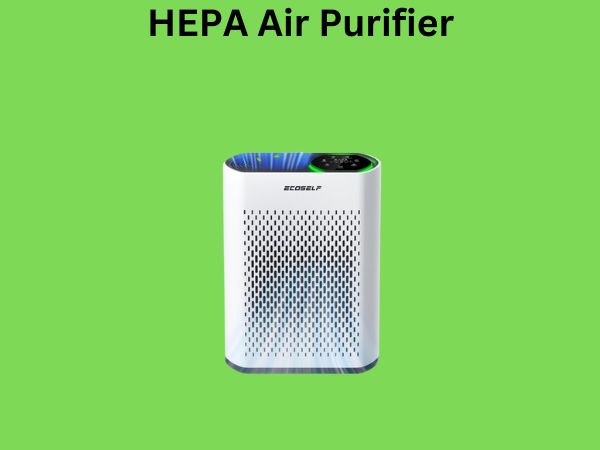
HEPA stands for High-Efficiency Particulate Air, and this is where traditional filtration technology comes in. Unlike ionizers, HEPA purifiers actually capture and trap particles rather than charging them to fall.
How HEPA Filters Work
A HEPA filter is essentially a dense mesh of fibers arranged randomly. When air passes through this filter, particles get trapped in the fibers through three mechanisms: interception, impaction, and diffusion. To be certified as a true HEPA filter, the device must capture at least 99.97% of particles that are 0.3 micrometers or larger.
Think of a HEPA filter like a net with incredibly tiny holes. Most particles simply can’t get through, so they remain trapped in the filter. You can see the filter, touch it, and eventually replace it when it becomes full of trapped contaminants.
HEPA Filter Efficiency
The reason HEPA filters are so widely recommended is their proven effectiveness. This technology has been used in hospitals, cleanrooms, and laboratories for decades because it genuinely works. When you buy a HEPA purifier, you’re investing in a technology backed by extensive scientific research and real-world results.
The Pros and Cons of Ionizer Air Purifiers
Advantages of Using Ionizers
Let’s talk about what ionizers do well. First, they’re typically very affordable. You can find decent ionizer units for a fraction of what you’d spend on a quality HEPA system. This makes them attractive for budget-conscious consumers.
Second, ionizers require minimal maintenance. There’s no filter to replace, no recurring costs for replacement parts. You just plug it in and let it run. For people who find filter maintenance annoying or expensive, this is a major selling point.
Third, some users report that ionizers create a fresher-feeling air environment. Whether this is due to actual air quality improvement or simply the psychological effect of negative ions is debated, but the experience matters to many people.
Finally, ionizers are silent. They produce virtually no noise, which is perfect if you’re sensitive to sound or want to use the device in a bedroom.
Disadvantages of Ionizers
However, ionizers have some significant drawbacks. The biggest issue is that they don’t actually remove particles from the air—they just make them fall. This means the particles still end up on your furniture, floors, and bedding. You’re essentially moving the problem rather than solving it.
There’s also the issue of ozone production. Many ionizers generate small amounts of ozone, which can actually harm your respiratory system. The EPA has warned against ozone-generating air purifiers because ozone can trigger asthma attacks and cause other health problems. While “ozone-free” ionizers exist, not all ionizers fall into this category.
Additionally, the effectiveness of ionizers is less scientifically proven compared to HEPA filters. Many studies show mixed results, and there’s ongoing debate in the scientific community about whether ionizers provide meaningful health benefits.
The Pros and Cons of HEPA Air Purifiers
Advantages of HEPA Filters
HEPA air purifiers have legitimate science behind them. They’ve been proven effective at removing particles from the air, and this technology has been validated through countless studies and real-world applications.
With a HEPA purifier, you’re actually removing contaminants from your breathing space. The particles get trapped in the filter and stay there, meaning you’re not just redistributing pollution around your room.
HEPA filters are excellent for people with allergies or asthma. Because they remove allergens so effectively, many people with respiratory conditions report genuine symptom improvement after using HEPA purifiers.
There’s also no ozone production concern with quality HEPA systems. You’re getting pure, safer air without the potential for respiratory irritation caused by ozone.
Disadvantages of HEPA Filters
The main drawback of HEPA purifiers is cost. Quality HEPA systems are more expensive than ionizers, both for the initial purchase and for ongoing filter replacements. Depending on usage, you might need to replace your HEPA filter every 6 to 12 months, which adds up financially.
HEPA purifiers also require maintenance. You need to remember to check the filter status, order replacements, and install new ones. For some people, this routine maintenance feels like a hassle.
Additionally, HEPA purifiers typically make more noise than ionizers because they have fans that push air through the filter. If you’re noise-sensitive, this could be a consideration.
Finally, HEPA purifiers work best in relatively sealed spaces. If your doors and windows are constantly open, the purifier has to work harder to keep up with new contaminants entering from outside.
Health Impact: What Does the Science Say?
HEPA and Respiratory Health
The health benefits of HEPA filtration are well-documented. Studies have shown that HEPA air purifiers can reduce allergen concentrations in indoor spaces, potentially alleviating symptoms for people with allergies and asthma. If you suffer from seasonal allergies or have a pet that sheds, a HEPA purifier can make a noticeable difference in your symptoms.
Ionizers and Health Concerns
When it comes to ionizers, the health picture is murkier. While some manufacturers claim that negative ions improve mood and energy levels, these claims lack strong scientific support. More concerning is the potential ozone risk. Some ionizers produce ozone as a byproduct, and even in small amounts, ozone can cause inflammation in your airways.
The American Lung Association has expressed concerns about air purifiers that produce ozone, recommending that consumers avoid such devices. This doesn’t mean all ionizers are bad, but you need to specifically look for ozone-free models if you go this route.
Comparing Effectiveness: Particle Removal Performance
When we look at actual particle removal capability, HEPA filters consistently outperform ionizers in clinical settings. HEPA filters capture particles at a rate of 99.97%, which is a measurable, verifiable standard. Ionizer effectiveness varies widely depending on the model and the specific particles involved.
For removing ultrafine particles (like those from smoke or pollution), HEPA filters are more reliable. For larger particles like pet dander or dust, both technologies show decent performance, but HEPA still maintains an edge in consistency.
Cost Comparison: Initial Investment and Long-Term Expenses
Ionizer Costs
Ionizers are budget-friendly upfront. You can find decent models for $30 to $150. Since there’s no filter replacement needed, ongoing costs are minimal. The main expense is electricity, which is negligible for most units.
HEPA Filter Costs
Quality HEPA purifiers range from $150 to over $800 depending on the brand and size. Then you need to factor in replacement filters, which typically cost $30 to $100 each and need replacement every 6 to 12 months. Over five years, you could spend anywhere from $300 to $1,500 on a HEPA system including filters.
Cost-Benefit Analysis
While HEPA systems are more expensive, you need to consider whether the improved air quality justifies the investment. For someone with respiratory issues or severe allergies, the health benefits might make a HEPA purifier worth the extra cost. For someone just looking for general air improvement, an ionizer might suffice.
Noise Level and Aesthetics
Ionizers operate silently, making them ideal for bedrooms or quiet workspaces. HEPA purifiers typically produce 20 to 50 decibels of noise depending on the fan speed, which is roughly equivalent to a quiet library or moderate conversation.
From an aesthetic perspective, many ionizers are compact and unobtrusive, while HEPA purifiers tend to be bulkier tower units or larger box-shaped devices. If space is limited or you care about appearance, this might influence your decision.
Which Air Purifier Should You Choose?
Choose an Ionizer If:
- You have a limited budget and want an affordable initial investment
- You prefer silent operation and minimal maintenance
- You’re interested in the sensation of fresh air and negative ions
- You live in a small space and need a compact solution
- You specifically purchase an ozone-free ionizer model
Choose a HEPA Purifier If:
- You have allergies, asthma, or other respiratory conditions
- You want scientifically proven particle removal
- You’re willing to invest in filter replacements
- You want the peace of mind that comes with a well-established technology
- You want to actually remove particles rather than redistribute them
- You have pets or live in an area with significant outdoor pollution
Hybrid Solutions: The Best of Both Worlds
Here’s something worth considering: many premium air purifiers now combine both HEPA filtration and ionizer technology. These hybrid systems try to capture the benefits of both approaches. The HEPA filter handles the heavy lifting of particle removal, while the ionizer provides additional purification and that fresh-air feeling.
If budget allows, these combination units might be worth exploring since they address some limitations of each individual technology. However, they’re naturally more expensive than either system alone.
Maintenance and Longevity
Ionizers require virtually no maintenance beyond occasional dusting of the device itself. They should last several years with minimal care.
HEPA purifiers require regular filter checks and replacements. Most quality units last 5 to 10 years or longer if you maintain them properly. The key is staying on top of filter replacements—a clogged filter loses effectiveness significantly.
Environmental Impact Considerations
From an environmental standpoint, ionizers are cleaner since they don’t generate physical waste like HEPA filters do. However, HEPA filters are usually recyclable or can be composted, so the environmental impact isn’t catastrophic.
The bigger environmental consideration is energy consumption. Most modern HEPA and ionizer units use similar amounts of electricity, so this shouldn’t be a major deciding factor.
Real-World User Experiences
What do actual users say about these technologies? People with allergies consistently report better sleep and fewer symptoms when using HEPA purifiers. Pet owners appreciate how much pet dander HEPA systems remove. However, some people also swear by their ionizers, claiming improved sleep quality and a fresher-feeling environment.
The difference often comes down to personal perception and individual health needs. Someone without allergies might not notice a dramatic difference with either system, while someone with severe allergies might find a HEPA purifier life-changing.
Red Flags When Shopping for Air Purifiers
Regardless of which technology you choose, watch out for misleading claims. Be skeptical of purifiers that promise to eliminate all particles or cure diseases. Look for specific certifications like the HEPA certification or ozone-free labels. If shopping for an ionizer, specifically verify it’s ozone-free.
Also, be wary of extremely cheap HEPA purifiers. If a HEPA system costs significantly less than comparable models, it might not be using genuine HEPA filters. Check the specifications and read reviews from verified purchasers.
Conclusion
The battle between ionizer and HEPA air purifiers doesn’t have a one-size-fits-all winner. Both technologies have legitimate uses and specific scenarios where they excel. Ionizers offer an affordable, low-maintenance option with a loyal following, though their effectiveness is less scientifically validated and they come with potential ozone concerns. HEPA purifiers, meanwhile, deliver proven particle removal backed by extensive research, making them particularly valuable for people with respiratory conditions, though they require investment and maintenance.
Your decision ultimately depends on your budget, health needs, and expectations. If you have allergies or asthma, a HEPA purifier is almost certainly the better investment despite the higher cost. If you’re simply looking for a budget-friendly air quality improvement and you specifically purchase an ozone-free model, an ionizer might do the job. And if you want the most comprehensive solution, don’t overlook hybrid systems that combine both technologies. Whatever you choose, the important thing is that you’re taking action to improve your indoor air quality—your lungs will thank you.