What Does the Ionizer Do on an Air Purifier?
An ionizer on an air purifier works by creating negatively charged ions. These ions attach to airborne particles like dust and allergens. The charged particles then clump together, making them heavier. This process helps them fall out of the air, so your purifier can trap them more easily. It’s a clever way to improve your indoor air quality.
Many air purifiers use ionizers as one of their cleaning methods. Sometimes, they work alongside other filters, like HEPA filters. Research has shown that this dual approach can be quite effective at removing tiny pollutants. You might also find that an ionizer can help neutralize odors. It’s a technology that aims to create a cleaner breathing environment for you and your family.
- Ionizers create negative ions.
- These ions attract and weigh down particles.
- This helps your air purifier capture them.
- Ionizers can boost the cleaning power of your unit.
Let’s break down exactly how this technology works on your air purifier and what you should know about it.
How an Air Purifier Ionizer Cleans Your Air
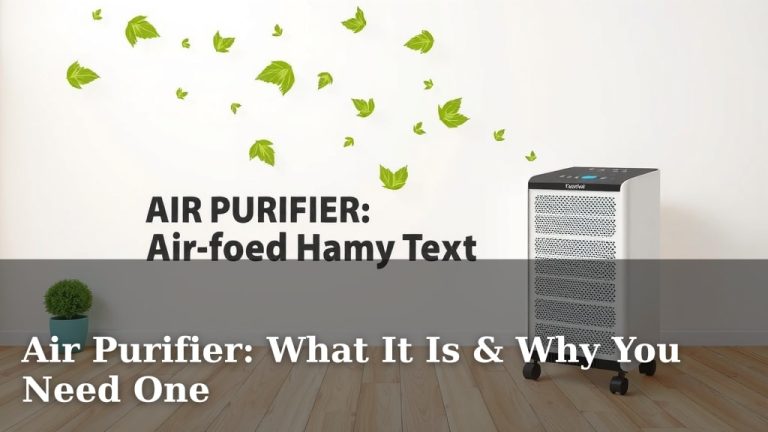
So, you’ve got an air purifier, and you’re wondering about that “ionizer” setting. What exactly does it do? Simply put, an ionizer is a component that generates negative ions. Think of these ions as tiny, electrically charged particles that play a big role in cleaning your air.
These negative ions are released into the air inside your home. They’re not just floating around aimlessly. Their main job is to find and attach themselves to airborne particles. These particles can include dust, pollen, pet dander, mold spores, and even smoke. It’s like they’re giving these tiny troublemakers a special tag.
The Science Behind Ionization
How does this tagging work? When the ionizer releases negative ions, these ions have a natural attraction to positively charged particles in the air. Many common indoor air pollutants carry a positive charge. When a negative ion from your air purifier meets a positive particle, they bond. This makes the particle heavier.
Imagine tiny dust motes floating around. The negative ions act like little magnets. They latch onto these dust particles. This causes them to stick together and become heavier. Because they are now heavier, they are less likely to stay suspended in the air. They tend to fall to the ground or other surfaces.
Attracting and Aggregating Particles
This aggregation process is key. When particles clump together, they form larger masses. These larger clumps are much easier for your air purifier’s filters to capture. Without the ionizer, these tiny particles might be too small or light to be efficiently trapped. They could just keep circulating.
So, the ionizer doesn’t directly “trap” the particles itself. Instead, it makes them more susceptible to being trapped by the physical filters in your unit. It’s a supportive technology that works hand-in-hand with other cleaning methods. It enhances the overall effectiveness of your air purifier.
Ionizers and Odor Neutralization
Beyond just removing physical particles, ionizers can also help with odors. Many odors in your home come from volatile organic compounds (VOCs) and other odor-causing molecules. These molecules are also often charged or can become charged when interacting with ions.
The negative ions can interact with these odor molecules. This interaction can change their chemical structure. In some cases, it neutralizes the odor. It’s like a chemical reaction happening in the air. This helps to reduce those unpleasant smells that can linger in your home. We’ve found that this can be especially helpful for things like cooking smells or pet odors.
Comparing Ionizers with Other Air Purification Methods
Air purifiers often use a combination of technologies. Ionization is frequently paired with HEPA filters. HEPA (High-Efficiency Particulate Air) filters are physical barriers designed to trap a very high percentage of airborne particles. They’re incredibly effective on their own.
When you use an ionizer along with a HEPA filter, you get a dual benefit. The ionizer helps to attract and aggregate smaller particles, making them larger. This assists the HEPA filter in capturing them more easily. It’s a synergistic effect. Research has shown that this combination can be very effective against tiny pollutants (NCBI).
Here’s a quick look at how ionizers compare:
| Method | How it Works | Pros | Cons |
|---|---|---|---|
| Ionizer | Creates negative ions that attach to particles, making them heavier and fall out of the air. Can also neutralize odors. | Can help with very small particles and odors. Often energy efficient. | May produce ozone (though many modern units minimize this). Relies on filters to trap aggregated particles. |
| HEPA Filter | Physical barrier that traps particles as air passes through. | Highly effective at capturing a wide range of particles. No ozone production. | Needs filter replacement. Can be less effective on gases or odors. |
| Activated Carbon Filter | Adsorbs gases, odors, and VOCs. | Excellent for smells and chemical pollutants. | Does not remove physical particles. Needs replacement. |
The Ozone Consideration
One aspect sometimes discussed with ionizers is ozone production. Some older or less advanced ionizers can produce small amounts of ozone as a byproduct. Ozone is a gas that, in high concentrations, can be irritating to the lungs. The U.S. Environmental Protection Agency (EPA) advises caution regarding ozone-generating air cleaners.
However, many modern air purifiers with ionizers are designed to produce very little, if any, ozone. Manufacturers are aware of these concerns. They implement technologies to keep ozone levels well below safety standards. Always check your air purifier’s specifications and any certifications it has regarding ozone output. Reputable brands aim for safety.
Maximizing the Benefits of Your Ionizer
To get the most out of the ionizer on your air purifier, consider these points:
- Keep it Clean: Just like your filters, the ionizer emitter points can get dirty. Check your manual for cleaning instructions.
- Combine with Filters: Ensure your unit also has a good filter system, like a HEPA filter. The ionizer works best when it has something to help capture the particles it aggregates.
- Check Ozone Levels: If you are sensitive or concerned, look for units that are certified to produce minimal ozone.
- Run it Consistently: For continuous air quality improvement, run your purifier with the ionizer on regularly.
- Placement Matters: Position your air purifier in a central location where it can circulate air effectively throughout the room.
Using the ionizer feature correctly can really make a difference in your home’s air. It’s a powerful tool for a cleaner living space.

Conclusion
You’ve learned how an air purifier’s ionizer works to improve your indoor air. By releasing negative ions, it helps clump together tiny airborne particles like dust and allergens. This makes them easier for your purifier’s filters to capture, boosting overall cleaning power. We also found that ionizers can assist in neutralizing unwanted odors. For the best results, remember to keep your ionizer clean and pair it with effective HEPA filters. Consider running your purifier with the ionizer consistently for cleaner air.
Frequently Asked Questions
Is it safe to use an air purifier with an ionizer?
Generally, yes. Modern ionizers are designed to produce very low levels of ozone, often below safety standards set by organizations like the EPA. If you have concerns, look for units certified for minimal ozone output. Always check your specific model’s specifications for peace of mind.
Do ionizers kill bacteria and viruses?
Ionizers primarily work by making particles heavier so they fall or are trapped by filters. While some research suggests ions can affect microorganisms, their main function isn’t direct sterilization. Air purifiers with HEPA filters are typically more effective at physically removing bacteria and viruses from the air.
How often should I clean my air purifier’s ionizer?
Consult your air purifier’s manual for the most accurate cleaning schedule. However, a good rule of thumb is to clean the ionizer emitter points every 2-4 weeks. This helps maintain its effectiveness and prevents dust buildup.
Can an ionizer make my air purifier less effective?
No, an ionizer generally enhances your air purifier’s effectiveness. It helps aggregate smaller particles, making them easier for physical filters like HEPA to capture. This dual action can lead to cleaner air more quickly than filters alone.
Should I always have the ionizer setting turned on?
For maximum air quality improvement, it’s often beneficial to keep the ionizer on. It continuously helps to weigh down particles and neutralize odors. However, if you are particularly sensitive to ozone, you might choose to turn it off or use a unit with very low ozone production.