Blueair vs Coway Air Purifier: Better Choice?
Deciding between a Blueair and a Coway air purifier can feel like picking a side in a clean air battle! Blueair is often the better choice for larger rooms and those prioritizing whisper-quiet operation. Coway tends to be a strong contender for smaller spaces and when budget-friendliness is a top concern.
Both brands are highly respected for their ability to tackle common indoor air pollutants. You’ll find they both use multi-stage filtration to capture everything from dust and pollen to pet dander and smoke. We found that many users appreciate the design aesthetics of both brands, making them fit nicely into home decor.
TL;DR:
- Blueair excels in larger areas.
- Coway is often more budget-friendly.
- Both are great at removing allergens.
- Consider room size and noise levels.
- Check filter replacement costs.
Ready to make your home’s air as fresh as a mountain breeze? Let’s dive into what makes each of these popular air purifiers unique so you can find your perfect match.
Choosing Between Blueair and Coway: Your Air Purifier Guide
Deciding on the right air purifier is a big step toward cleaner indoor air. You’re looking for something that works well for your space and your needs. We’ve researched Blueair and Coway to help you see which one might fit into your home best.
Understanding Air Purification Technology
Both Blueair and Coway air purifiers use multi-stage filtration systems. This is great because it means they can capture a wide range of airborne particles. Think of it like a series of nets, each catching different sizes of things floating in your air. Your goal is to get rid of dust, pollen, pet dander, mold spores, and even smoke particles.
HEPA Filters: The Gold Standard
A key part of these systems is the HEPA filter. HEPA stands for High-Efficiency Particulate Air. These filters are designed to capture at least 99.97% of particles that are 0.3 microns in size. That’s incredibly small! Research shows HEPA filters are very effective at removing common allergens (National Institutes of Health).
Activated Carbon for Odors and Gases
Beyond HEPA, many models from both brands include activated carbon filters. These are like sponges for odors and gases. They work by adsorbing Volatile Organic Compounds (VOCs) and other chemicals. This is super helpful if you deal with cooking smells, pet odors, or even fumes from cleaning products.
Blueair: Performance in Larger Spaces
Blueair air purifiers are often praised for their ability to handle larger rooms. If you have an open-concept living area or a spacious bedroom, Blueair might be your top pick. Their machines are engineered to deliver a high Clean Air Delivery Rate (CADR). This tells you how quickly an air purifier can clean a room.
Key Strengths of Blueair
One thing many users love about Blueair is its quiet operation. Even when working hard to clean your air, the noise level is often very low. This makes them ideal for bedrooms or home offices where you need peace and quiet. They also tend to have a sleek, modern design that fits well into many home decors.
Filtration Technology: HEPASilent
Blueair uses a unique technology called HEPASilent. It combines electrostatic and mechanical filtration. This method allows them to achieve high filtration efficiency while using less fan power. Research indicates this can lead to quieter operation and energy savings.
When is Blueair the Better Choice?
You might lean towards Blueair if:
- You need to purify a large living space.
- You prioritize whisper-quiet performance.
- You appreciate a stylish, minimalist design.
- You’re willing to invest a bit more for these features.
Coway: Value and Effectiveness
Coway air purifiers have gained a strong following for offering excellent performance at a more accessible price point. They are often a fantastic choice for medium to smaller rooms. If you’re on a budget or need to equip multiple rooms, Coway presents a compelling option.
Coway’s Signature Features
Coway models often include a 4-stage filtration system. This typically includes a pre-filter, an odor filter (often activated carbon), a HEPA filter, and sometimes an ionizer. Many of their units are compact and easy to move from room to room. Their user interfaces are generally intuitive and easy to understand.
Performance in Smaller to Medium Rooms
While Blueair shines in large spaces, Coway models are perfectly suited for bedrooms, home offices, or smaller living areas. You’ll find their CADR ratings are competitive for their intended room sizes. Many reviewers note that Coway machines are effective at reducing common allergens.
Smart Features and Connectivity
Some of Coway’s higher-end models come with smart features. These might include Wi-Fi connectivity, app control, and air quality monitoring. You can often see your home’s air quality in real-time through your smartphone. This can be very useful for understanding your environment.
When is Coway a Good Fit?
Consider Coway if:
- You’re looking for a budget-friendly option.
- You need to purify smaller to medium-sized rooms.
- You want a unit with easy-to-use controls.
- Smart features are appealing to you.
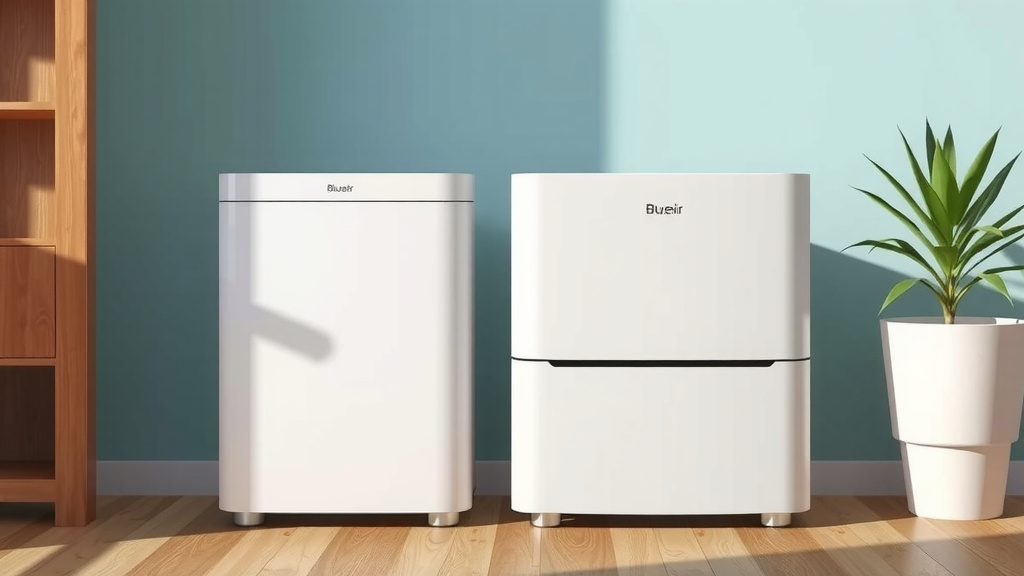
Comparing Key Aspects: A Quick Look
To help you visualize the differences, let’s put some key points side-by-side. This isn’t exhaustive, but it highlights the main considerations we found.
| Feature | Blueair | Coway |
|---|---|---|
| Best For | Larger rooms, quiet operation | Smaller to medium rooms, budget-conscious |
| Filtration Tech | HEPASilent (electrostatic + mechanical) | Multi-stage (HEPA, Carbon, Pre-filter) |
| Noise Level | Generally quieter, especially on lower settings | Can be louder on higher settings, but still reasonable |
| Design | Often more premium, minimalist | Functional, modern, sometimes more compact |
| Price Range | Mid to high | Entry to mid |
Filter Replacement Costs: An Important Factor
Don’t forget to factor in the ongoing cost of filter replacements. Both brands require you to replace filters periodically. Research shows that HEPA filters typically need replacing every 6 to 12 months, depending on usage and air quality. Activated carbon filters may also need replacement around the same time or sooner if odors are a major concern.
What to Expect
You’ll find that filter costs can vary. Blueair filters can sometimes be more expensive upfront. Coway filters are generally more affordable. Always check the specific model you’re interested in and the cost of its replacement filters. This is a key part of your long-term ownership cost.
Making Your Final Decision: A Checklist
To help you weigh your options, consider these points:
- What is the square footage of the room you need to purify?
- How important is noise level for your space?
- What is your budget for the initial purchase?
- What is your budget for replacement filters?
- Do you prefer simple controls or smart features?
- Does the design of the unit matter for your home decor?
Conclusion
You’ve learned that both Blueair and Coway are strong contenders in the air purifier market. Blueair often takes the lead for larger spaces and those who value near-silent operation, though it may come at a higher price. Coway offers excellent value, making it a great choice for smaller rooms and budget-conscious buyers. Your decision hinges on balancing room size, noise preferences, and your budget for both the unit and its ongoing filter replacements. We recommend revisiting your room dimensions and noise tolerance before making your final purchase.
Frequently Asked Questions
How often should I replace the filters on my Blueair or Coway air purifier?
Generally, you’ll need to replace HEPA filters every 6 to 12 months. Activated carbon filters might need attention around the same time, especially if you’re dealing with strong odors. Always check your specific model’s manual for the manufacturer’s recommendations.
Are Blueair air purifiers really quieter than Coway?
Research and user feedback often indicate that Blueair units tend to operate more quietly, particularly on lower fan speeds. Coway purifiers are also designed to be reasonably quiet, but some models may produce more noticeable noise on their highest settings.
Which brand is better for pet owners?
Both brands use HEPA and activated carbon filters, which are effective at capturing pet dander and odors. Many users find both Blueair and Coway perform well for pet-related allergens and smells. Consider the room size you need to cover, as that might be the deciding factor.
Can I use an air purifier in a very small room, like a nursery?
Yes, you can. For smaller spaces, a Coway model might be a more budget-friendly and appropriately sized option. Ensure the unit’s CADR rating matches or exceeds the room’s square footage to ensure effective air cleaning.
Are Blueair’s HEPASilent filters more effective than Coway’s standard HEPA filters?
HEPASilent technology combines electrostatic and mechanical filtration, allowing for high efficiency with less fan power, contributing to quieter operation. Coway typically uses a multi-stage approach including a standard HEPA filter. Both are highly effective at capturing microscopic particles, but Blueair’s technology may offer a slight edge in noise reduction.