Air Purifier vs Humidifier vs Dehumidifier
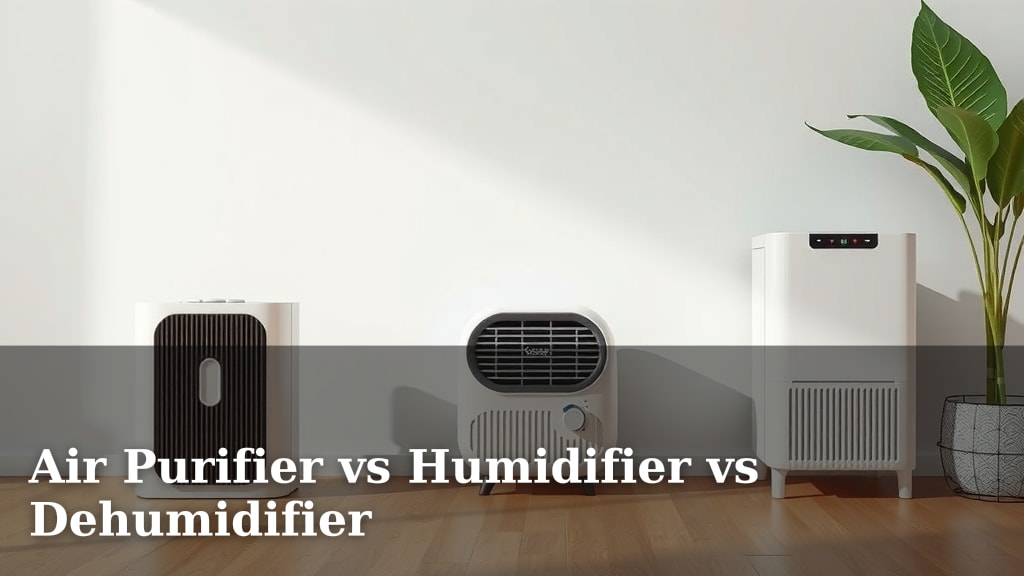
When deciding between an air purifier, humidifier, and dehumidifier, remember they serve distinct purposes for your home’s air quality. An air purifier removes pollutants like dust and allergens. A humidifier adds moisture to dry air, while a dehumidifier removes excess moisture from damp air. You need to know your specific air problem to choose the right device.
Many people get these devices confused, thinking they do the same job. But each tackles a different aspect of your indoor environment. Understanding the main difference between them is key to breathing easier and maintaining a comfortable home. We found that picking the wrong one can actually make your air quality worse!
- Air purifiers clean air from particles.
- Humidifiers add moisture to dry air.
- Dehumidifiers remove moisture from damp air.
- Choose based on your air quality issues.
- They are not interchangeable.
Let’s dive into the specifics of each device. We’ll help you figure out which one, or maybe even which combination, is right for your home.
Air Purifier vs. Humidifier vs. Dehumidifier: What’s the Real Difference?
It’s easy to get these home comfort devices mixed up. They all work with the air in your home. But they each tackle a very different job. Think of them as specialized tools for air quality. We found that choosing the right one is key to a healthier, more comfortable living space.
Understanding Air Purifiers: Your Home’s Air Filter
An air purifier is like a vacuum cleaner for your air. Its main job is to capture tiny particles floating around. These particles can include dust, pollen, pet dander, mold spores, and even smoke. If you or someone in your family suffers from allergies or asthma, an air purifier can offer real relief.
How Air Purifiers Work
Most air purifiers use a fan to draw air into the unit. Then, the air passes through a series of filters. The most common type is a HEPA filter. HEPA stands for High-Efficiency Particulate Air. These filters are designed to trap at least 99.97% of particles that are 0.3 microns in size. Smaller particles can also be captured. Some purifiers also have activated carbon filters. These are great for removing odors and gases, like those from cooking or smoke. Research from the Environmental Protection Agency (EPA) suggests that air purifiers can effectively reduce indoor air pollutants.
When You Might Need an Air Purifier
- You have allergies or asthma.
- You own pets that shed a lot.
- You live in an area with poor outdoor air quality.
- Someone in your home smokes.
- You want to reduce everyday dust.
Understanding Humidifiers: Adding Moisture to Your Air
A humidifier is designed to do the opposite of a dehumidifier. Its purpose is to increase the humidity levels in a room or your entire home. When the air is too dry, it can cause problems. You might experience dry skin, chapped lips, a scratchy throat, or even a dry cough. Dry air can also make static electricity worse and damage wooden furniture or instruments.
How Humidifiers Work
There are several types of humidifiers. Cool mist humidifiers release a visible mist of water into the air. Warm mist humidifiers boil water to create steam, which is then released. Ultrasonic humidifiers use high-frequency vibrations to create a fine mist. Evaporative humidifiers use a fan to blow air through a wet wick or filter. We found that cool mist models are generally safer for homes with children, as they don’t use hot water. The U.S. Centers for Disease Control and Prevention (CDC) notes that maintaining optimal indoor humidity levels can help reduce the survival of some viruses.
When You Might Need a Humidifier
- Your skin feels dry and itchy.
- You wake up with a sore throat or stuffy nose.
- You notice static electricity is a frequent issue.
- Wooden furniture or floors have started to crack.
- You live in a naturally dry climate.
- Winter heating systems tend to dry out your home.
Understanding Dehumidifiers: Removing Excess Moisture
Now, let’s talk about the dehumidifier. This device works to reduce the amount of moisture in the air. If your home feels damp, sticky, or smells musty, a dehumidifier might be your solution. High humidity can create a breeding ground for mold, mildew, and dust mites. This can worsen allergies and lead to respiratory problems. The Mayo Clinic advises that keeping humidity levels between 30% and 50% can help control dust mites and mold growth.
How Dehumidifiers Work
Most dehumidifiers work by drawing moist air over cold coils. As the air cools, the moisture condenses into water. This water is then collected in a reservoir or drained away through a hose. Some models also have a small fan to circulate the drier air back into the room. You’ll typically find that dehumidifiers have a humidistat, similar to a thermostat, which allows you to set your desired humidity level. They are particularly useful in basements, bathrooms, and other areas prone to dampness.
When You Might Need a Dehumidifier
- Your home smells musty or like mildew.
- You see mold or mildew growing on walls or ceilings.
- Condensation forms on windows or pipes.
- Your basement or crawl space is constantly damp.
- Clothes take a long time to dry indoors.
- You live in a humid or tropical climate.
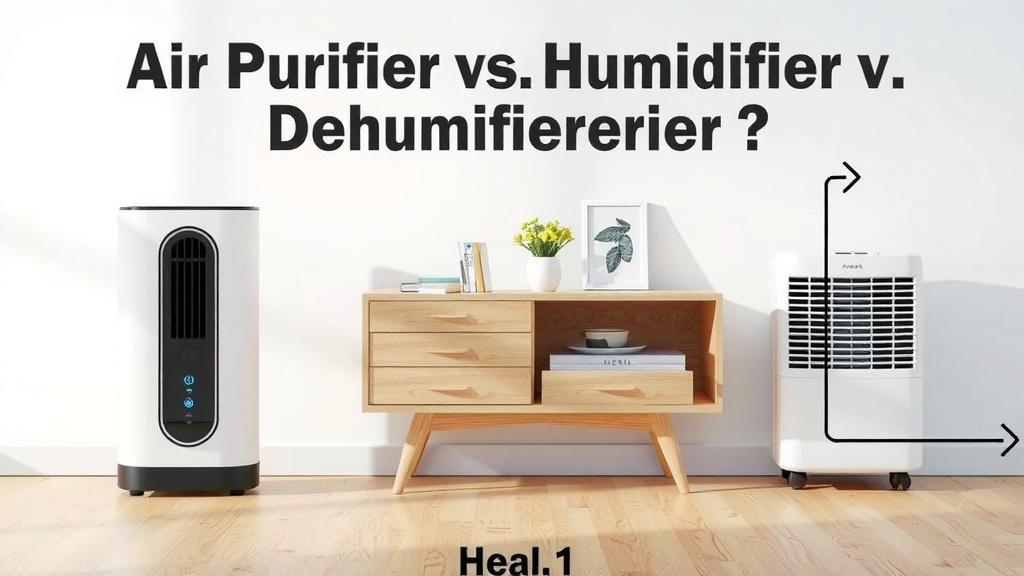
Air Purifier vs. Humidifier vs. Dehumidifier: A Quick Comparison
It’s helpful to see how these devices stack up side-by-side. This table breaks down their primary functions and ideal use cases.
| Device Type | Primary Function | When to Use | What It Addresses |
|---|---|---|---|
| Air Purifier | Removes airborne particles and pollutants. | Allergies, asthma, pet dander, smoke, dust. | Poor air cleanliness, allergens, odors. |
| Humidifier | Adds moisture to dry air. | Dry skin, sore throat, static electricity, dry climate. | Low humidity discomfort, health irritations from dryness. |
| Dehumidifier | Removes excess moisture from the air. | Musty smells, mold growth, dampness, humid climate. | High humidity issues, mold prevention, musty odors. |
Can You Use Them Together?
Absolutely! In some cases, using a combination of these devices can provide the best results. For instance, if you live in a region with both dry winters and humid summers, you might use a humidifier during the dry months and a dehumidifier during the humid ones. You can also use an air purifier year-round to combat allergens and pollutants, regardless of the humidity level. Many experts suggest that a balanced approach to indoor air quality is often best. They found that controlling both pollution and humidity is important for overall comfort and health.
Your Checklist for Choosing the Right Device
To help you decide, run through this quick checklist. Ask yourself these questions about your home’s air:
- Do I often sneeze or have itchy eyes due to pollen or dust? (Consider an air purifier)
- Is my skin dry, or do I get frequent nosebleeds in winter? (Consider a humidifier)
- Does my basement or bathroom feel damp and smell musty? (Consider a dehumidifier)
- Are there visible signs of mold or mildew growth? (Definitely consider a dehumidifier)
- Do I have pets that shed heavily? (An air purifier is a must)
- Does the air just feel generally “stale” or polluted? (An air purifier is likely your best bet)
By identifying your main air quality concern, you can confidently select the device that will make the biggest difference. Sometimes, the solution is simple, and other times it might involve a bit of a multi-device strategy. We found that paying attention to these signs is the first step to a more comfortable home environment.
Conclusion
You’ve learned that air purifiers, humidifiers, and dehumidifiers are specialized tools for your home’s air. An air purifier tackles airborne particles for cleaner breathing. A humidifier adds much-needed moisture to dry air, easing discomfort. A dehumidifier removes excess dampness, preventing mold and musty smells. We found that identifying your primary air concern is the clearest path to choosing the right device. Don’t guess; diagnose your air quality problem to find the best solution for your comfort and health.
Frequently Asked Questions
Can an air purifier help with humidity problems?
No, an air purifier’s main job is to remove particles from the air, not to add or remove moisture. If you have humidity issues, you’ll need a humidifier or dehumidifier instead.
Is it okay to run a humidifier and dehumidifier at the same time?
Generally, no. Running both at once would create a constant battle, with one adding moisture and the other removing it. This is inefficient and could potentially harm your devices.
How often should I clean my air purifier filter?
Filter cleaning or replacement frequency depends on the model and your home environment. We found that checking your air purifier’s manual is best, but most filters need attention every 1-3 months for optimal performance.
Can a dehumidifier make my air too dry?
Yes, if set too high or run for too long in a less humid environment, a dehumidifier can remove too much moisture. Most models have a humidistat to help you maintain your desired humidity level.
Which device is best for someone with severe allergies?
For severe allergies, an air purifier with a HEPA filter is usually the most beneficial. It directly targets common allergens like dust, pollen, and pet dander floating in your air.