Exploring Essential Oil Diffusers and Their Purpose
Let me ask you something—when was the last time you actually thought about the air you’re breathing inside your home? Most of us don’t, right? We’re too busy juggling work, family, and everything else that life throws at us. But here’s the thing: the air quality inside your home directly impacts your health, mood, and overall well-being. That’s where the confusion between air purifiers and essential oil diffusers comes in. People often assume these two devices do the same thing, but they’re actually quite different. In this guide, I’m going to break down exactly what each device does, how they differ, and most importantly, why you might actually benefit from having both in your home.
An air purifier is essentially a health guardian for your indoor environment. Think of it like a bouncer at a nightclub—it filters out unwanted guests (pollutants) and only lets the clean air through. But what exactly is it removing?
How Air Purifiers Work
Air purifiers work through a series of filtration stages. The most common type uses a HEPA filter, which stands for High Efficiency Particulate Air. These filters can capture 99.97% of particles that are 0.3 microns or larger. That includes dust, pollen, pet dander, mold spores, and even bacteria and viruses. Some advanced models also include activated carbon filters that remove odors and volatile organic compounds.
When you turn on an air purifier, it draws air from your room through these filters and then releases the cleaned air back into your space. It’s a continuous process that happens over and over throughout the day.
What Air Purifiers Remove from Your Home
- Dust particles and dust mites
- Pollen from outdoor sources
- Pet hair and dander
- Mold spores
- Bacteria and viruses
- Smoke particles
- Chemical odors and VOCs
- Cooking fumes
If you’ve ever noticed that your allergies seem worse indoors or you wake up with a stuffy nose, poor indoor air quality might be the culprit. Air purifiers directly address this problem by physically removing these particles from your breathing space.
Now let’s talk about essential oil diffusers. These devices serve a completely different purpose, and honestly, they’re more about creating an experience than cleaning the air—though some people think they do both.
How Essential Oil Diffusers Function
An essential oil diffuser disperses tiny aromatic particles throughout your room. Most modern diffusers use ultrasonic technology, which vibrates at high frequencies to break down essential oils and water into a fine mist. When you breathe in this mist, you’re inhaling the aromatic compounds from the oils. It’s a sensory experience that can influence your mood and emotional state.
The Primary Benefits of Using a Diffuser
- Creates a pleasant fragrance throughout your room
- May help reduce stress and anxiety
- Can potentially improve sleep quality
- Adds moisture to dry indoor air
- Creates a spa-like atmosphere in your home
- Offers aromatherapy benefits
When you use a lavender diffuser before bed, for instance, you’re not cleaning the air—you’re creating an environment that promotes relaxation. The lavender scent triggers your brain to release chemicals that calm your nervous system. It’s psychology and biology working together.
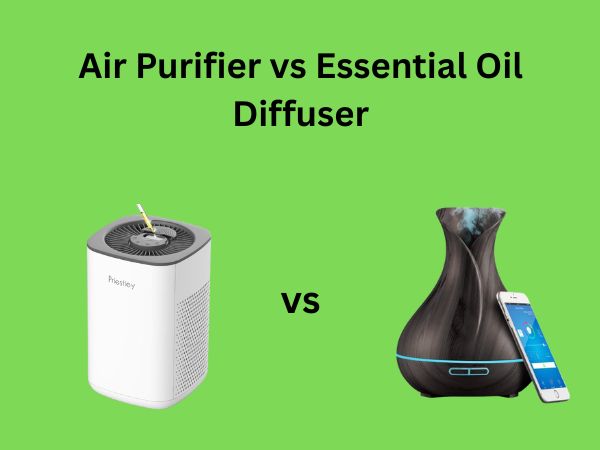
The Key Differences Between These Two Devices
Primary Function: Health vs. Wellness
This is the most fundamental difference. Air purifiers are designed with health in mind—they remove harmful particles that could make you sick or trigger allergies. Essential oil diffusers, on the other hand, are wellness devices. They make your space smell better and may help you feel more relaxed or energized depending on which oils you use.
What They Remove or Disperse
An air purifier removes particles you don’t want. A diffuser adds particles (aromatic compounds) that you do want. These are opposite functions. Some people mistakenly believe that a diffuser cleans the air because it adds fragrance, but a pleasant smell doesn’t mean the air is clean. You could have horrible indoor air quality that smells wonderful because of a diffuser—and that’s actually a dangerous combination.
Maintenance and Operational Costs
Air purifiers require regular filter replacements, which can cost anywhere from $20 to $100+ depending on the model and filter quality. You’ll typically need to replace filters every 6 to 12 months. Essential oil diffusers just need water and the essential oils themselves, which are relatively inexpensive. Over time, an air purifier is more expensive to maintain, but it’s also doing more work for your health.
Noise Levels During Operation
Air purifiers can be quite noisy, especially when running on high settings. Some people find the constant hum annoying, though quieter models are available at premium prices. Essential oil diffusers are incredibly quiet—most operate nearly silently, making them perfect for bedrooms or offices where noise is a concern.
When You Absolutely Need an Air Purifier
There are specific situations where an air purifier isn’t just nice to have—it’s genuinely necessary for your health and comfort.
Allergy and Asthma Sufferers
If you or anyone in your household battles allergies or asthma, an air purifier is a game-changer. By removing allergens like pollen and dust mites, you’re directly reducing triggers that cause symptoms. Many people with allergies report significant improvements after installing a good air purifier in their bedroom.
Living in High-Pollution Areas
If you live in a city with heavy traffic or near industrial areas, outdoor air pollution seeps into your home. An air purifier with good sealing and filtration can significantly improve your indoor air quality despite external pollution.
Homes with Pets
Pet owners deal with constant shedding and dander. If you’re tired of finding pet hair on everything or experiencing allergy symptoms from your furry friends, an air purifier will make a noticeable difference in air quality and cleanliness.
After Renovations or Painting
Construction dust and paint fumes contain harmful particles and chemicals. Running an air purifier during and after these projects protects your respiratory system from these temporary but serious air quality issues.
When an Essential Oil Diffuser Truly Adds Value
While diffusers don’t clean the air, they definitely have their place in a healthy home environment.
Creating a Relaxing Bedroom Atmosphere
Using lavender or chamomile oils in your bedroom before sleep can genuinely improve sleep quality. There’s actual science behind this—these oils contain compounds that promote relaxation. A diffuser delivers these benefits quietly and consistently throughout the night.
Managing Stress and Anxiety
Certain oils like bergamot, frankincense, and ylang-ylang have mood-boosting properties. If you’re working from home and feeling stressed, running a diffuser with these oils can create a calming environment that improves your mental state without any medication or side effects.
Improving Your Home’s Ambiance
Let’s be honest—a home that smells fresh and inviting feels better. Whether it’s citrus oils that energize or vanilla that comforts, a diffuser instantly makes your space more pleasant. It’s not health care, but it’s self-care, and that matters.
Why You Might Actually Want Both Devices
Here’s where this really gets interesting. While these devices serve different purposes, they complement each other beautifully in a comprehensive approach to indoor wellness.
The Complete Indoor Environment Strategy
Imagine this scenario: you have an air purifier running to remove allergens, dust, and pollutants from your air. That’s the health foundation. Now add an essential oil diffuser that fills your space with calming lavender. You’ve now created a space that’s both physically clean and psychologically comfortable. You’re not just breathing cleaner air—you’re breathing cleaner air that smells wonderful and makes you feel relaxed. That’s the power of using both.
Addressing Different Times of Day
You might run your air purifier continuously to maintain baseline air quality, but use your diffuser strategically. In the morning, run it with energizing oils like lemon or peppermint. In the evening, switch to calming oils. Your air purifier doesn’t care what time of day it is—it just keeps working, removing particles 24/7.
Cost-Benefit Analysis of Both Devices
An entry-level air purifier costs $150-$400, with filters costing $30-$100 annually. A quality diffuser costs $30-$80. Together, you’re investing in both clean air and an enhanced living experience. For most households, this is a worthwhile investment, especially if anyone has allergies or respiratory concerns.
Choosing the Right Air Purifier for Your Needs
Room Size Considerations
Air purifiers are rated for specific room sizes. A small purifier won’t effectively clean a large bedroom, and an industrial-sized unit in a small office is overkill and wasteful. Check the CADR (Clean Air Delivery Rate) rating and match it to your space.
Filter Types Matter
HEPA filters are the gold standard for particle removal. Activated carbon filters handle odors and chemicals. Look for multi-stage filtration for comprehensive cleaning. Some models also include UV-C light technology, which kills bacteria and viruses.
Selecting the Perfect Essential Oil Diffuser
Ultrasonic vs. Other Diffusion Methods
Ultrasonic diffusers are the most popular because they’re quiet, efficient, and affordable. Nebulizing diffusers use no water and produce stronger scent, but they’re noisier and use more oil. Heat diffusers are gentler on oils but less effective at dispersing them.
Conclusion
So, do you need both an air purifier and an essential oil diffuser? The answer depends on your specific situation. If you have allergies, asthma, or live in a polluted area, an air purifier is essential for your health—not optional. An essential oil diffuser isn’t health care, but it’s a wonderful addition to your self-care routine and home environment.
The best approach? Don’t think of these as competing products. Think of them as partners working together to create a healthier, more pleasant living space. An air purifier handles the serious work of removing harmful particles, while a diffuser adds an emotional and sensory dimension to your environment. Together, they create a home that’s not just cleaner, but also more comfortable and inviting. That’s the true answer to the air purifier versus diffuser debate—they’re not rivals. They’re complementary tools for a holistic approach to indoor wellness.
Frequently Asked Questions
Can an essential oil diffuser clean the air like an air purifier does?
No, essential oil diffusers cannot clean the air in the way air purifiers do. While diffusers disperse aromatic particles, they don’t remove allergens, dust, or pollutants. In fact, the water vapor from a diffuser could potentially add moisture to the air, which might temporarily worsen conditions for dust mites. If you need actual air cleaning, you need an air purifier. A diffuser simply makes your clean (or unclean) air smell better.
Is it safe to use an air purifier and diffuser at the same time?
Yes, it’s completely safe to use both devices simultaneously. They operate on different principles and won’t interfere with each other. Your air purifier will remove particles while your diffuser adds aromatic compounds. The only minor consideration is that your air purifier will eventually filter out some of the diffused essential oil particles, but this doesn’t create any safety issues. Many people successfully use both devices in the same room.
How often should I replace my air purifier filter?
Most HEPA filters should be replaced every 6 to 12 months, depending on usage and air quality in your home. If you live in a high-pollution area or have pets, you might need to replace filters more frequently. Some air purifiers have filter replacement indicators that alert you when it’s time. Always check your specific model’s recommendations because filter lifespan varies significantly between brands and types.
What essential oils are best for promoting better sleep?
Lavender is the most scientifically-backed oil for sleep improvement. Chamomile, sandalwood, and cedarwood are also excellent choices. Roman chamomile is particularly calming, while vetiver promotes deep relaxation. For best results, use a high-quality, pure essential oil in your diffuser about 30 minutes before bedtime. Avoid stimulating oils like peppermint or lemon in the evening.
Do air purifiers remove odors?
Standard HEPA-only air purifiers remove some odor particles, but they’re not the best choice for odor elimination. Air purifiers with activated carbon filters are much more effective at removing smells. Activated carbon absorbs odorous molecules directly. If odor removal is a priority, specifically look for air purifiers that include activated carbon filtration in their multi-stage filter systems.