Air Doctor vs Honeywell Air Purifier: Which One Should You Choose?
When you’re standing in the air purifier aisle, or scrolling through endless online reviews, you’ve probably stumbled across two names that keep popping up: Air Doctor and Honeywell. Both claim to be the best at cleaning your indoor air, but here’s the thing—they’re quite different machines with different strengths. So which one actually deserves a spot in your home? Let me walk you through this decision together.
Understanding Your Air Quality Problem First
Before we dive into comparing these two brands, let’s talk about why you’re even looking at air purifiers in the first place. Are you dealing with pet dander that seems to multiply overnight? Maybe you live near a highway and worry about pollution seeping into your home. Perhaps allergies make your eyes water and your nose run constantly. Or could it be that stale, stuffy indoor air that just doesn’t feel fresh anymore? Your specific problem really should guide your choice between Air Doctor and Honeywell.
Air Doctor: The Premium Performer
Air Doctor has positioned itself as the upscale option in the air purification market. Think of it as the luxury sedan of air purifiers—it’s sleek, it performs well, and it comes with a price tag to match that positioning.
What Makes Air Doctor Stand Out
The Air Doctor uses a unique filtration system that combines medical-grade HEPA filters with activated carbon and a pre-filter. What’s interesting about their approach is how they’ve focused on removing not just common particles, but also capturing odors and volatile organic compounds. This matters if you’ve got cooking smells that linger or if you’re sensitive to chemical off-gassing from furniture and paint.
The UltraHEPA Filter Technology
Air Doctor doesn’t just use standard HEPA filters. They’ve branded their version as UltraHEPA, claiming it captures particles down to 0.003 microns. For context, that’s incredibly small—we’re talking about particles that are nearly invisible. Regular HEPA filters typically stop at 0.3 microns, so this is a significant difference if the claims hold up.
Coverage Area and Room Size
Air Doctor air purifiers come in different models designed for various room sizes. Their larger models can handle spaces up to 900 square feet, which is perfect if you’re trying to clean the air in an open-concept living area or a larger bedroom. The smaller units work great for bedrooms or offices.
Price Point and Value Consideration
Let’s be honest—Air Doctor is pricey. You’re looking at spending anywhere from $400 to $600 for their standard models. That’s a significant investment, and it’s worth asking yourself whether the premium features justify the cost for your specific needs.
Honeywell Air Purifiers: The Practical Choice
Honeywell is a household name that’s been around for decades. When you think of reliable home appliances, Honeywell often comes to mind. Their air purifiers reflect this reputation—they’re solid, dependable machines that don’t try to reinvent the wheel.
Honeywell’s Straightforward Approach
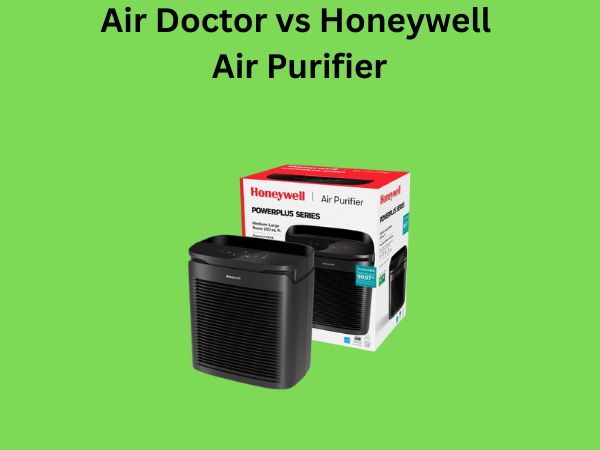
Honeywell air purifiers use a more traditional three-stage filtration system: a pre-filter, a True HEPA filter, and an activated carbon filter. There’s nothing flashy about it, but that simplicity is actually a strength. It means fewer things can go wrong, and the replacement filters are usually more affordable and easier to find.
True HEPA Filtration
When Honeywell says their filters are True HEPA certified, they mean they meet strict government standards. These filters capture 99.97% of particles as small as 0.3 microns. It’s the industry standard, and while it might not be as fine as Air Doctor’s claims, it’s a proven, tested technology that works reliably.
Multiple Models for Different Needs
Honeywell offers an impressive range of air purifier models. Whether you need something compact for a small bedroom or a robust unit for a large living room, they’ve got you covered. This variety means you’re more likely to find a Honeywell that fits your specific space.
Budget-Friendly Pricing
Here’s where Honeywell really shines for many people. You can grab a solid Honeywell air purifier for $150 to $300, depending on the model. That’s significantly less than Air Doctor, making it accessible for people who want cleaner air without breaking the bank.
Comparing Filtration Technologies Side by Side
Both Air Doctor and Honeywell use HEPA filtration, but let’s dig deeper into how their systems actually compare in real-world performance.
Multi-Stage Filtration Systems
Air Doctor uses a four-stage system:
- Pre-filter to catch larger particles like dust and pet hair
- Medical-grade HEPA filter for fine particles
- Activated carbon filter for odors and VOCs
- An ionizer feature in some models
Honeywell sticks with three stages:
- Pre-filter for larger debris
- True HEPA filter for small particles
- Activated carbon filter for odors
The extra stage in Air Doctor’s system might catch more, but Honeywell’s simpler approach is more maintainable and typically more cost-effective over time.
Particle Size Capture Rates
Air Doctor advertises capture of particles down to 0.003 microns with their UltraHEPA technology. Honeywell’s True HEPA filters capture down to 0.3 microns. That’s a 100-fold difference in claimed capability. However, here’s something to consider: most common household pollutants—dust mites, pet dander, pollen, and mold spores—fall into the 0.5 to 10 micron range, where both systems perform equally well.
Noise Levels: How Quiet Can They Be?
Nobody wants an air purifier that sounds like a jet engine running in their living room. Let’s talk about noise because this impacts your daily experience more than you might think.
Air Doctor Noise Performance
Air Doctor purifiers typically operate at noise levels between 25 and 54 decibels, depending on the speed setting. On the lowest setting, they’re nearly silent—quieter than a whisper. On the highest setting, they’re comparable to normal conversation. This range makes them suitable for bedrooms or offices where quiet operation matters.
Honeywell Noise Levels
Honeywell air purifiers generally range from 35 to 65 decibels across different speed settings. Their quietest settings are decent for nighttime use, but they can get noticeably louder on higher speeds compared to some Air Doctor models. If you’re sensitive to noise, this is worth considering.
Energy Consumption and Operating Costs
Let’s talk about the ongoing expenses, because your initial purchase is just the beginning of the financial commitment.
Electricity Usage Comparison
Air Doctor purifiers typically consume between 45 and 90 watts depending on the model and speed setting. Honeywell models usually fall in the 50 to 85 watt range. So we’re talking about relatively similar electricity consumption—neither is a power hog. Over a year of continuous operation, the difference in your electric bill would be minimal.
Filter Replacement Costs
Here’s where the long-term cost differences become more apparent. Air Doctor replacement filters can cost $80 to $150, and you’ll typically need to replace them every 6 to 8 months depending on usage. Honeywell filters run about $40 to $80 and often last a similar timeframe. If you’re operating the purifier for years, those filter costs add up significantly.
Design and Aesthetics: Do They Look Good?
I know this sounds superficial, but where you place your air purifier means you’re going to look at it constantly. Does it need to match your décor?
Air Doctor’s Modern Design
Air Doctor purifiers have a contemporary, minimalist aesthetic. They’re compact, sleek, and come in white or black finishes. They blend into modern homes easily and don’t look like clunky appliances. If aesthetics matter to you and you have a modern interior, Air Doctor will integrate seamlessly.
Honeywell’s Practical Design
Honeywell air purifiers are more utilitarian in appearance. They’re functional boxes designed to be effective rather than fashionable. Some models are taller and bulkier, which can make them more noticeable in a room. However, they’re still inoffensive and come in neutral colors that fit most home settings.
Smart Features and Technology Integration
Modern appliances are increasingly connected to your smartphone and smart home systems. How do these two brands stack up?
Air Doctor’s Smart Capabilities
Newer Air Doctor models come with Wi-Fi connectivity and app control. You can monitor air quality in real-time, schedule operation times, and receive filter replacement reminders from your phone. Some models also include air quality sensors that adjust fan speed automatically based on detected pollutants.
Honeywell’s Smart Features
Honeywell also offers smart-enabled models with app control and air quality monitoring. Their smart features are generally comparable to Air Doctor, though the integration might not feel as polished in all cases. Many Honeywell models also include auto-mode that adjusts fan speed based on air quality detection.
Warranty and Customer Support
When you invest in an appliance, the warranty and support behind it matter. What happens if something breaks?
Air Doctor Warranty Coverage
Air Doctor typically offers a one-year manufacturer’s warranty on their purifiers. They also have a customer service team available for support. Their warranty covers defects in materials and workmanship, which is standard in the industry.
Honeywell Warranty and Support
Honeywell generally provides a similar one-year warranty, though some premium models might offer extended options. Being an established company with decades of reputation, Honeywell’s customer support infrastructure is extensive, with options for phone support, email, and online chat.
Real-World Performance: What Owners Say
Let’s move beyond specifications and talk about what actual users experience with these machines.
Air Doctor User Experiences
People who’ve purchased Air Doctor consistently mention noticeable improvements in air quality, particularly regarding odors. Pet owners report that lingering pet smells diminish significantly. Allergy sufferers describe breathing easier within days of operation. However, some users find the higher price point hard to justify, and a few mention that the improvements, while real, are more noticeable in smaller rooms than in large open spaces.
Honeywell User Experiences
Honeywell owners generally praise the reliability and quiet operation of their units. Many appreciate the straightforward setup and maintenance. For people with mild to moderate air quality issues, they report satisfaction with the results. Some users do mention that on higher speed settings, noise becomes more pronounced, and a few feel the coverage area claims are optimistic for very large rooms.
Which Air Purifier Should You Actually Choose?
This is the question you really came here to answer, right? Let me break it down into scenarios.
Choose Air Doctor If:
You have the budget for a premium air purifier and want the best available filtration technology. You’re dealing with persistent odors from cooking, smoking, or chemical sensitivities. You live in a space with moderate to severe air quality issues. You appreciate modern design and smart home integration. You prioritize the quietest possible operation and don’t mind paying for that performance.
Choose Honeywell If:
You want a reliable, proven air purifier without spending a fortune. You have mild to moderate air quality concerns like seasonal allergies or basic dust control. You prefer simplicity and don’t need advanced smart features. You value long-term affordability, considering filter replacement costs. You have limited space and need flexibility in model sizing. You want easy maintenance and widely available replacement parts.
Making Your Decision: A Practical Framework
Before you make your final choice, ask yourself these questions: What’s your budget ceiling? How serious is your air quality problem? Do you have pets, or do household members suffer from allergies? How important is noise level in your decision? Will you actually use smart features, or would you prefer simplicity? How long do you plan to keep this purifier?
Your answers to these questions will naturally point you toward one option or the other. There’s genuinely no wrong choice here—both Air Doctor and Honeywell make functional air purifiers. The difference is in the features, price, and which brand’s approach aligns better with your specific situation and preferences.
Conclusion
The Air Doctor versus Honeywell debate doesn’t have a universal winner because it depends entirely on your circumstances, budget, and priorities. Air Doctor positions itself as the premium choice with advanced filtration, modern design, and smart features that justify its higher price point. It’s ideal for people willing to invest in top-tier air purification and who want the latest technology integrated into their home. Honeywell, meanwhile, represents practical, reliable air purification at a price point that makes it accessible to more people. It gets the job done effectively for common air quality issues without unnecessary complexity or premium pricing. Both companies have solid reputations, proven track records, and committed customer bases for good reasons. Before purchasing, consider your specific air quality challenges, how much you can spend upfront and on maintenance, your aesthetic preferences, and whether smart features would genuinely enhance your experience. Whichever direction you choose, you’ll be taking a meaningful step toward breathing healthier, cleaner air in your home.
Frequently Asked Questions
How often do I need to replace filters in Air Doctor and Honeywell purifiers?
Both Air Doctor and Honeywell filters typically need replacement every 6 to 8 months under normal household use, though this can vary based on your local air quality and how frequently you run the purifier. If you live in an area with high pollution or have pets, you might need replacements more often. The key difference is that Air Doctor filters cost significantly more, so factor that into your long-term budget calculations.
Can air purifiers help with allergies, and which brand is better for allergy sufferers?
Yes, both Air Doctor and Honeywell can help reduce allergy symptoms by capturing common allergens like pollen, dust mites, and pet dander. For allergy sufferers specifically, both brands work equally well for these common particles. However, Air Doctor’s additional activated carbon stage might provide extra relief if your allergies are compounded by odors or chemical sensitivities. Start with whichever fits your budget, and if symptoms don’t improve after a few weeks, the issue might not be air quality related.
Are these air purifiers effective against viruses and bacteria?
HEPA filters in both Air Doctor and Honeywell can capture viral and bacterial particles, but air purification alone isn’t considered a primary defense against airborne illnesses. The filters work best when combined with proper ventilation and other preventive measures. Some Air Doctor models include ionizers that claim additional antimicrobial benefits, though research on ionizers remains mixed regarding their effectiveness and safety.