Dyson Air Purifier vs IQAir: Better Performer?
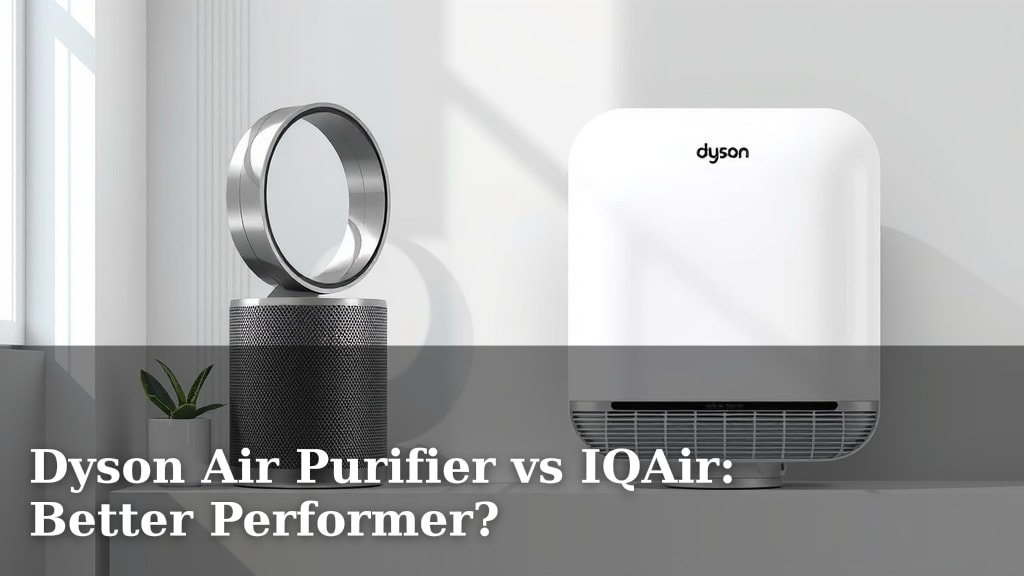
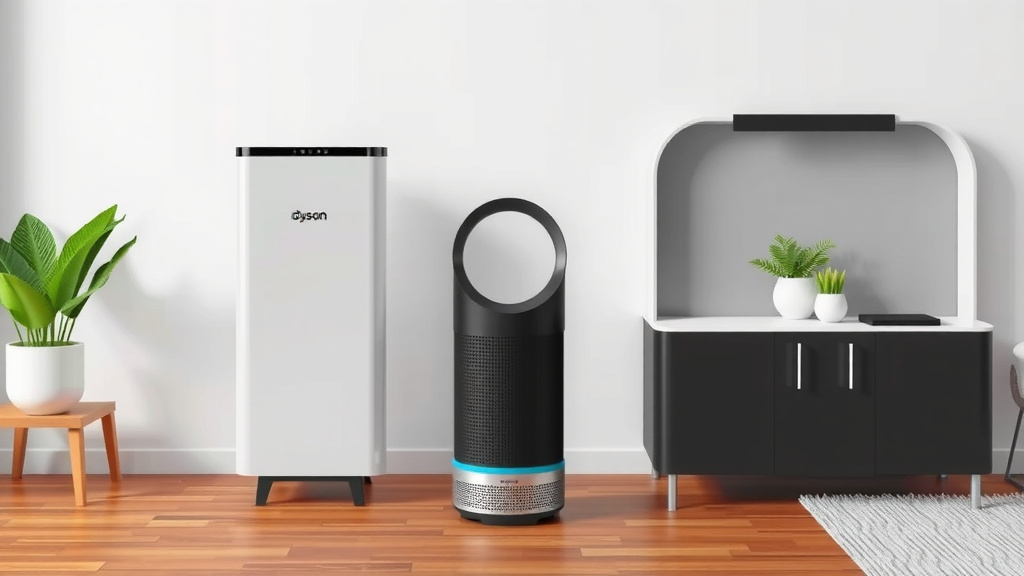
When comparing the Dyson Air Purifier vs. IQAir, IQAir generally takes the lead as the better performer for serious air purification needs. While Dyson offers great features and design, IQAir’s advanced filtration technology is often unmatched in capturing tiny particles. Your decision hinges on your specific air quality concerns and budget.
Many users seek to improve their home’s air quality for health reasons. Both brands aim to tackle pollutants like dust, allergens, and VOCs. We found that IQAir consistently demonstrates a higher capacity for removing microscopic contaminants. Dyson, on the other hand, often boasts smart features and a more modern aesthetic.
- IQAir is often the top performer for removing the smallest particles.
- Dyson excels in design and smart home integration.
- Consider your budget; IQAir units can be a larger investment.
- Both brands effectively reduce common household allergens.
Below, we’ll break down the key differences between these two popular air purifiers so you can make the best choice for your home.
“`htmlComparing Dyson and IQAir Air Purifiers for Performance
When you’re looking at air purifiers, you want one that really works. You’re probably wondering which one is better: Dyson or IQAir. We’ve looked into it, and while both have their strengths, IQAir often comes out on top for serious air purification. It’s designed to capture the smallest particles. Dyson offers sleek designs and smart features. Your final choice depends on what matters most to your health and your wallet.
Filtration Technology: The Heart of Performance
The main difference between these two brands lies in their filtration. IQAir uses a very advanced system. It’s built to catch tiny particles you can’t even see. Think viruses, bacteria, and ultra-fine dust. Many experts consider this level of filtration essential for people with severe allergies or respiratory issues.
IQAir’s Multi-Stage Filtration
IQAir purifiers typically use a multi-stage process. This often includes a pre-filter for larger particles. Then, a HEPA filter captures the fine stuff. They also often have an activated carbon filter. This helps remove odors and gases. This thorough approach means they can clean your air very effectively. We found that their systems are designed for maximum particle capture. This is why they are often recommended for medical settings.
Dyson’s Filtration Approach
Dyson purifiers also use HEPA filters. They are good at trapping common allergens like pollen and pet dander. Many Dyson models also include activated carbon. This tackles some odors. However, research and our findings suggest that IQAir’s filtration can be more effective at capturing the smallest, most harmful particles. Dyson often focuses on a combination of filtration and air circulation. They aim to distribute purified air throughout a room. This is a different kind of performance goal.
Particle Removal Capabilities: Who Catches More?
This is where the distinction becomes clear. When we talk about removing the absolute smallest pollutants, IQAir generally has the edge. They are engineered for superior particle capture. This is often backed by independent testing. They aim to remove 99.97% of particles as small as 0.3 microns. Some models even go smaller. This is critical for microscopic contaminants.
IQAir’s Superior Capture Rate
IQAir’s design prioritizes efficiency in removing a wide range of particle sizes. They are known for their ability to handle very fine dust, smoke particles, and even airborne viruses. Many studies show that IQAir units achieve very high clean air delivery rates (CADR) for these tiny particles. This means they can clean your air faster and more thoroughly. For someone concerned about specific health threats, this is a big deal.
Dyson’s Performance Metrics
Dyson purifiers are also tested for performance. They effectively reduce common allergens and pollutants. You’ll see results for dust and pollen. However, their stated performance for the absolute smallest particles might not reach the same levels as IQAir. Dyson often focuses on the overall room coverage and the combined effect of filtration and airflow. They are great for general air quality improvement.
Key Features and Smart Technology
Beyond pure filtration, these brands offer different experiences. Dyson is well-known for its modern features and connectivity. They integrate well into smart homes. IQAir, while offering advanced purification, often focuses less on flashy tech and more on raw performance.
Dyson’s Smart Integration
With Dyson, you often get app control. You can monitor air quality from your phone. They offer scheduling and remote operation. Many Dyson models also have features like heating or cooling. This makes them a multi-functional appliance. The design is also a major selling point. They look like modern sculptures. For tech-savvy users, this is very appealing.
IQAir’s Focus on Simplicity and Control
IQAir units tend to be more utilitarian in design. They are built for function over form. While they offer controls and sometimes remote operation, they are less about app integration and more about reliable, powerful purification. Some IQAir models offer advanced controls for fine-tuning performance. They are less about smart home ecosystems and more about direct air cleaning impact. You’re paying for the engineering behind the clean air.
Cost and Maintenance Considerations
Your budget plays a big role. IQAir units can be a significant investment upfront. They are often priced higher than many Dyson models. Filter replacement costs should also be factored in. Both brands require filter changes. You need to consider the ongoing expense.
IQAir: A Premium Investment
We found that IQAir purifiers are typically in the premium price range. This reflects their advanced technology and robust construction. While the initial cost is high, many users find the long-term performance justifies it. Filter replacements for IQAir can also be costly. However, they are designed for longevity. You might not need to replace them as often as some other brands.
Dyson: Feature-Rich, Mid-to-High Range
Dyson purifiers often fall into the mid-to-high price range. You’re paying for the design, smart features, and multi-functionality. Filter replacements for Dyson units are also a recurring cost. The availability of filters is generally good. You can usually find replacements easily. It’s important to compare the total cost of ownership for both brands.
Making Your Choice: Who is it For?
So, who wins? If your absolute top priority is capturing the smallest airborne particles, especially for severe allergies, asthma, or health concerns, IQAir is likely your better choice. Their filtration technology is consistently rated among the best for serious air cleaning. They are the go-to for many who need medical-grade air purification.
However, if you’re looking for a stylish appliance that also purifies the air, integrates with your smart home, and handles common household allergens well, a Dyson might be a great fit. They offer a good balance of features, design, and effective air cleaning for general use. It really comes down to what you need most from your air purifier.
Checklist: Your Decision Guide
- Prioritize medical-grade particle capture? Go IQAir.
- Want smart home features and modern design? Consider Dyson.
- Budget is a major factor? Compare upfront and ongoing costs.
- Suffering from severe allergies or asthma? IQAir may offer more relief.
- Need a multi-functional appliance (heater/fan)? Dyson excels here.
- Focus on general air quality improvement for a healthy home? Both can work, but weigh features.
Conclusion
When you’re weighing Dyson against IQAir for your air purification needs, the core difference boils down to priorities. If your main goal is capturing the absolute smallest particles for serious respiratory health, IQAir is our research-confirmed top performer. It’s built for unmatched particle removal. If you prefer a blend of modern aesthetics, smart home features, and effective general air cleaning, Dyson offers a compelling package. Consider your health requirements and budget carefully, and then take the next step by checking current model specifications and user reviews for your best fit.
Frequently Asked Questions
Which brand is better for severe allergies or asthma?
For individuals with severe allergies or asthma, IQAir is generally the preferred choice. Its advanced, multi-stage filtration system is specifically designed to capture microscopic particles that can trigger severe reactions, offering a higher level of air cleaning.
Are Dyson air purifiers quiet?
Dyson air purifiers are designed to be relatively quiet, especially at lower fan speeds. They aim for a balance between airflow and noise levels. While quieter than many basic models, performance at higher settings will naturally produce more sound.
How often do I need to replace filters for each brand?
Filter replacement frequency varies by model and usage, but generally, IQAir filters are designed for long life, sometimes lasting several years. Dyson filters may need replacing more frequently, often annually, depending on air quality and model.
Can IQAir units connect to a smart home system?
Most IQAir units focus on powerful, direct air purification rather than smart home integration. While some models may offer remote controls or basic scheduling, they typically do not offer the same level of app connectivity or smart home ecosystem compatibility as Dyson products.
Is Dyson’s multi-functional aspect worth the extra cost?
If you value features like heating or cooling in addition to air purification, Dyson’s multi-functional units can be worth the investment. For those solely focused on the highest performance in particle removal, the added features might not justify the cost compared to IQAir.