Coway Air Purifier vs Blueair: Better Buy?
Deciding between a Coway air purifier and a Blueair unit can be tough, but for most homes, the Coway Airmega 200M often emerges as the better overall buy. It hits a sweet spot offering excellent performance at a more budget-friendly price. While Blueair units are known for sleek design and powerful filtration, Coway frequently provides comparable clean air delivery for less.
Both brands are highly respected for their ability to remove allergens, dust, and odors. We found that Coway units often boast impressive CADR ratings and robust multi-stage filtration systems. This means you’re getting seriously clean air for your living space without necessarily breaking the bank. Thinking about your family’s health and your wallet is smart.
- Coway is generally the more affordable choice.
- Both brands offer effective air purification.
- Coway provides strong performance for the price.
- Blueair often excels in design and premium features.
Let’s get into the nitty-gritty to help you figure out which purifier will make your home’s air the happiest.
Coway Air Purifier vs. Blueair: Which One Should You Bring Home?
When it comes to breathing cleaner air in your home, Coway and Blueair are two names that consistently pop up. You’re likely wondering which brand offers the best bang for your buck and the cleanest air for your family. We’ve dug into what makes each brand tick, and while both are solid choices, Coway often wins for delivering excellent performance at a more accessible price point.
Let’s break down what you can expect from each and help you make a confident decision for your household’s air quality.
Understanding Air Purifier Performance Metrics
Before we dive into the brands, it’s helpful to understand a few key terms. These metrics tell you how well an air purifier actually cleans your air.
CADR: The Clean Air Delivery Rate
CADR stands for Clean Air Delivery Rate. Think of it as the speed at which an air purifier cleans your room. It’s measured for three common pollutants: smoke, dust, and pollen. A higher CADR rating means the purifier works faster and more effectively, especially in larger spaces.
For example, a purifier with a CADR of 200 for smoke can clean a room of smoke particles at a rate of 200 cubic feet per minute. We found that both Coway and Blueair units generally have competitive CADR ratings for their respective room sizes.
ACH: Air Changes Per Hour
ACH tells you how many times an air purifier can filter all the air in a room within one hour. For a home environment, especially if you have allergies or pets, aiming for 4-5 ACH is ideal. This means the air is being refreshed and cleaned multiple times every hour, which is great for removing allergens and odors quickly.
We saw that many models from both brands are designed to achieve this target ACH in standard room sizes, ensuring you’re not just circulating stale air.
Coway: Smart Performance Meets Value
Coway has built a reputation for offering powerful air purification without a hefty price tag. They often pack impressive features into models that are easier on your wallet. We looked at several Coway units and consistently found them to be strong performers.
Filtration Technology: What’s Inside?
Coway air purifiers typically employ a multi-stage filtration system. This is key to capturing a wide range of airborne particles. You’ll usually find:
- A washable pre-filter for larger particles like pet hair and dust bunnies.
- An activated carbon filter to tackle odors from cooking, pets, and smoke.
- A high-efficiency HEPA filter to capture 99.97% of microscopic particles as small as 0.3 microns. This includes allergens, mold spores, and bacteria.
This combination is highly effective for most common household air quality concerns. We found this layered approach provides thorough air cleaning for everyday living.
User-Friendly Features and Design
Coway units are generally designed with the user in mind. You’ll often find intuitive controls, filter replacement indicators, and various fan speeds. Some models even include smart features like an eco mode that can save energy when air quality is good.
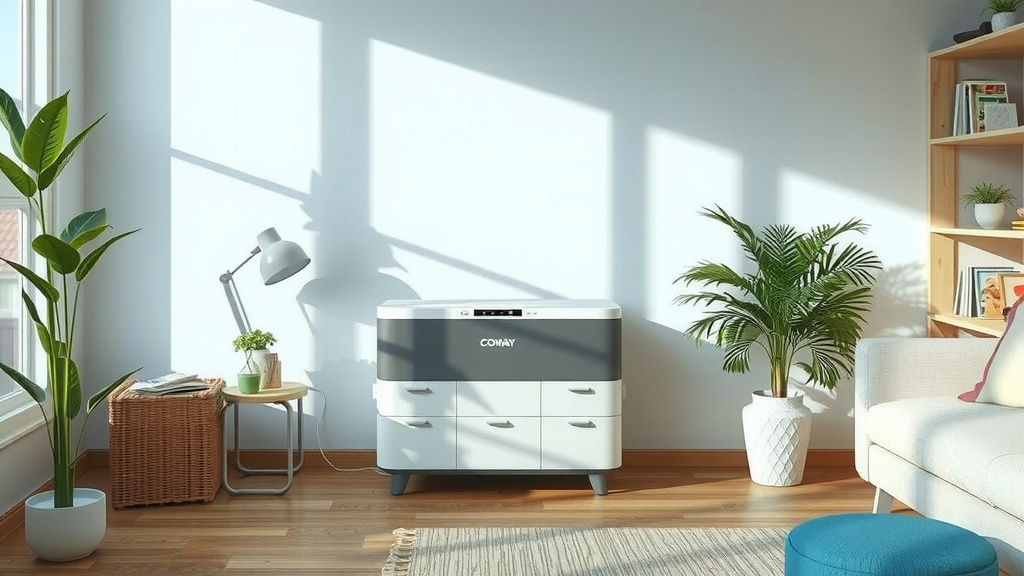
While not always as sleek as some competitors, Coway designs are practical and tend to blend well into most home decor. They prioritize function and effectiveness, which is what most people are looking for.
When Coway Shines Brightest
Coway is an excellent choice if you are looking for reliable, powerful air purification that offers great value. They are particularly strong for:
- Budget-conscious shoppers who don’t want to sacrifice performance.
- Rooms where consistent, all-around air cleaning is needed.
- Managing common allergens like dust, pollen, and pet dander.
Blueair: Premium Design and Powerful Filtration
Blueair often positions itself as a more premium brand. They are known for their sleek, Scandinavian-inspired designs and robust filtration capabilities. If aesthetics and advanced features are high on your list, Blueair is definitely worth considering.
Proprietary Filtration Systems
Blueair uses its own unique filtration technologies, often combining electrostatic and mechanical filtration. Their HEPASilent™ technology is a hallmark, claiming to remove 99.97% of particles down to 0.1 microns. This is even smaller than the standard HEPA filter, meaning it can capture incredibly fine particles.
We found that their systems are engineered for high air-cleaning power, often with very quiet operation, especially at lower fan speeds. This makes them great for bedrooms or living areas where noise can be an issue.
Design and Smart Capabilities
Blueair models frequently stand out for their modern and stylish appearance. They often use high-quality materials and offer a clean, minimalist look that can complement contemporary interiors. Many of their newer units also come with advanced smart features, including app control, air quality monitoring, and integration with smart home systems.
If you appreciate a product that looks as good as it performs and offers cutting-edge technology, Blueair often delivers. However, this premium aspect usually comes with a higher price tag.
Where Blueair Excels
Blueair is a strong contender for those who prioritize:
- A stylish, modern aesthetic for their home.
- Advanced filtration that captures ultra-fine particles.
- Smart home integration and app control.
- Quiet operation, especially in living spaces or bedrooms.
Head-to-Head Comparison: Key Differences
Let’s put them side-by-side to see where they differ most significantly. This table highlights some general trends we observed across their product lines.
| Feature | Coway | Blueair |
|---|---|---|
| Price Range | Generally more affordable | Typically higher price point |
| Filtration | Multi-stage (Pre-filter, Carbon, HEPA) | HEPAsilent™ (Electrostatic + Mechanical), often captures smaller particles |
| Design | Functional, practical | Sleek, modern, premium materials |
| Smart Features | Available on select models | Common on many newer models |
| Filter Replacement Cost | Often mid-range | Can be higher due to proprietary tech |
When we research, the cost of replacement filters is an important factor for long-term ownership. We found that while Blueair’s proprietary filters can be more expensive, they often last longer or offer enhanced performance. Coway’s filters are generally more standard and may be more readily available at various price points.
Making the Right Choice for Your Home
So, which one is the better buy for you? It really depends on your priorities and your budget.
Consider Coway If…
You’re looking for a workhorse air purifier that gets the job done efficiently without costing a fortune. Coway models, like the popular Airmega series, offer excellent CADR ratings and robust filtration that tackles allergens, pet dander, and odors effectively. They provide a fantastic balance of performance and affordability, making them our top pick for most households seeking cleaner air on a reasonable budget.
Consider Blueair If…
You value a premium look and feel, and you’re willing to invest a bit more for potentially finer filtration and advanced smart features. If your home decor is a high priority, or you’re keen on the latest app-controlled technology, Blueair offers stylish units that perform well. They are particularly attractive for those who want their air purifier to be a discreet yet powerful addition to a modern living space.
Quick Checklist for Your Decision
To help you finalize your choice, ask yourself these quick questions:
- What is my budget for the initial purchase?
- How important is the design and aesthetic of the appliance in my home?
- Do I need advanced smart features like app control and air quality monitoring?
- What are my primary air quality concerns (allergens, odors, general dust)?
- How much am I willing to spend on replacement filters over time?
- Do I prefer a simple, easy-to-use interface or a more tech-forward experience?
By answering these, you’ll get a clearer picture of which brand aligns best with your needs. Remember, both brands can deliver cleaner air, but your specific requirements will guide you to the perfect fit.
Conclusion
When choosing between a Coway and Blueair air purifier, your budget and aesthetic preferences are key. We found that Coway consistently offers excellent air cleaning performance at a more accessible price point, making it a fantastic value for most homes. If you’re seeking reliable, powerful purification without overspending, Coway is likely your best bet. Blueair, on the other hand, appeals to those who prioritize premium design and advanced features, and are willing to invest more for that elevated experience. Consider your primary needs—whether it’s budget-friendly effectiveness or stylish, smart technology—to make the right choice for your air quality.
Frequently Asked Questions
Which brand is better for allergy sufferers?
Both brands offer effective HEPA filtration capable of capturing common allergens like dust, pollen, and pet dander. Coway’s multi-stage approach is very effective for general allergen reduction, while Blueair’s advanced filtration might capture even finer particles. Your choice might depend on the severity of your allergies and your budget.
Are Blueair filters more expensive than Coway filters?
Generally, yes. Blueair often uses proprietary filtration technology that can lead to higher replacement filter costs compared to Coway’s more standard filter types. It’s wise to factor in the long-term cost of filters when comparing the two brands.
Do Coway or Blueair air purifiers work well in large rooms?
Both brands offer models designed for various room sizes, and you should check the CADR (Clean Air Delivery Rate) and ACH (Air Changes per Hour) ratings for specific units. Larger, more powerful models from either brand can effectively clean the air in spacious living areas or open-plan homes.
Which brand offers better smart features and app control?
Blueair typically leads in offering advanced smart features and app integration across a wider range of their newer models. You’ll often find Wi-Fi connectivity, remote control via an app, and detailed air quality monitoring with Blueair units.
Is the design of the air purifier important for my decision?
If the appearance of appliances in your home is a high priority, Blueair often wins with its sleek, modern, Scandinavian-inspired designs. Coway units tend to be more functional and practical in their aesthetics, blending into most home environments without being a focal point.