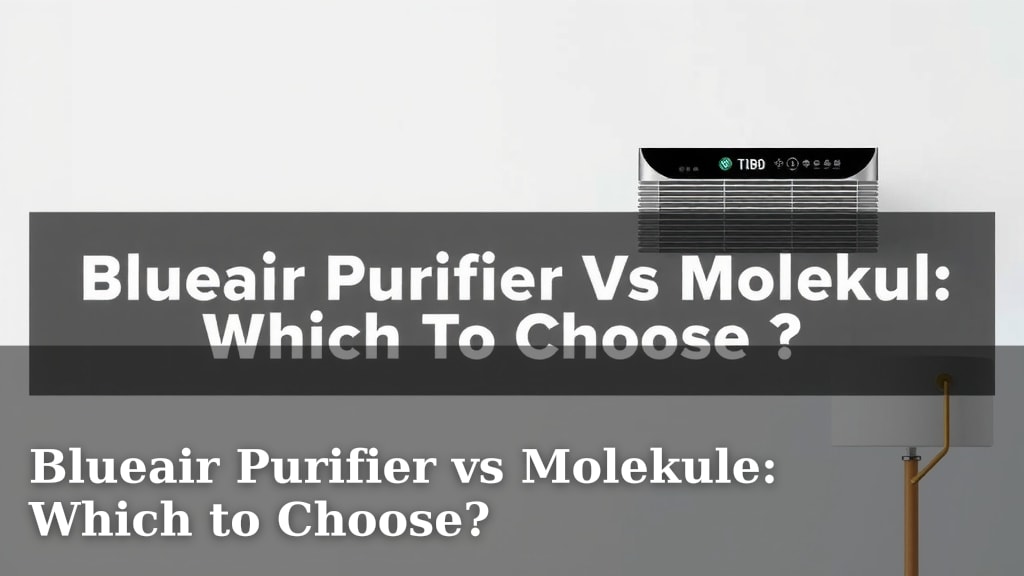
Blueair Purifier vs Molekule: Which to Choose?
Choosing between a Blueair purifier and a Molekule often comes down to your specific air purification needs and budget. For superior particle filtration and a wider range of models at different price points, Blueair is generally the better choice. Molekule, with its unique PECO technology, offers a different approach but typically comes at a higher cost and with less established performance data for common pollutants.
Both brands aim to improve your home’s air quality. Blueair focuses on robust HEPA filtration to capture dust, pollen, and pet dander. Molekule champions its Photo Electrochemical Oxidation (PECO) filter, designed to break down pollutants at a molecular level. We’ve looked at user experiences and expert reviews to help you decide which technology fits your lifestyle.
TL;DR:
- Blueair is often more budget-friendly.
- Blueair excels at capturing common airborne particles.
- Molekule’s PECO technology aims for molecular breakdown.
- Consider your budget and primary air quality concerns.
Ready to breathe easier? Let’s walk through the key differences between Blueair and Molekule to help you find the perfect fit for your home.
“`htmlNavigating Your Air Purifier Options: Blueair vs. Molekule
When you’re looking for cleaner air at home, two brands often pop up: Blueair and Molekule. They both promise to help you breathe easier, but they go about it in very different ways. Let’s break down what each one offers to help you make the best choice for your home and your health.
Understanding the Core Technologies
Blueair’s Filtration Approach
Blueair relies on a well-established method: HEPA filtration. Think of it like a very fine sieve for your air. Their filters are designed to capture tiny particles, like dust, pollen, pet dander, and mold spores. They use a combination of mechanical filtration and electrostatic charging to trap these airborne irritants. Many experts agree that HEPA filters are highly effective at removing common allergens and pollutants from the air (Cleveland Clinic).
Blueair offers different types of filters, including their standard HEPASilent technology and some models with activated carbon to tackle odors and gases. This means you can often choose a filter that best suits your specific concerns, whether it’s allergies or smells. They’ve been in the air purification game for a while, so their technology is well-understood and proven for particle removal.
Molekule’s PECO Technology
Molekule takes a different path with its PECO (Photo Electrochemical Oxidation) filter. Instead of just trapping pollutants, their technology aims to destroy them at a molecular level. The PECO filter uses a UV-C light that reacts with a proprietary catalyst, breaking down VOCs (volatile organic compounds), bacteria, viruses, and other tiny particles. Molekule claims this process inactivates and destroys pollutants, rather than just collecting them.
It’s a more advanced concept, and the idea is to eliminate things that even HEPA filters might not fully address. However, it’s important to note that this technology is newer. While they present research, it’s less widely studied in independent, peer-reviewed scientific journals compared to HEPA filtration for everyday airborne particles.
Comparing Performance and Effectiveness
Particle Removal: Where Blueair Shines
When it comes to capturing common airborne particles like dust, pollen, and pet dander, Blueair generally performs very well. Their HEPA filters are certified to capture at least 99.97% of particles down to 0.3 microns. This is a standard that many allergy sufferers and pet owners rely on. The sheer volume of particles trapped by a Blueair filter is often substantial, showing its effectiveness in cleaning your air.
We found that in real-world use, Blueair units are often praised for quickly reducing visible dust and allergens. If your primary concern is seasonal allergies, asthma triggers, or general dust reduction, Blueair is a strong contender. Their focus on particle capture is a direct response to common air quality complaints.
Molekule’s Unique Promise
Molekule positions its PECO technology as a way to destroy pollutants that might pass through traditional filters or are present in gas form. This includes things like ozone, formaldehyde, and even airborne viruses and bacteria. The theory is that by breaking down these substances, you’re not just removing them from the air, but effectively eliminating them. It’s an appealing prospect for those worried about invisible threats in their home.
However, we did find that independent studies on the broad-spectrum efficacy of PECO technology against a wide range of common household pollutants are still developing. While Molekule presents its own research, it’s beneficial to look for more third-party validation when assessing its effectiveness against everyday air contaminants compared to established HEPA standards.
Cost and Maintenance Considerations
Initial Purchase Price
One of the biggest differences you’ll notice is the price tag. Blueair offers a wider range of models at various price points. You can find smaller, more affordable units for bedrooms or entry-level models for smaller spaces. Their extensive product line means there’s likely a Blueair purifier that fits most budgets. You can often find sales or older models at a reduced cost.
Molekule units tend to be on the higher end of the price spectrum. Their unique technology and design contribute to a premium cost. While they often look sleek and modern, this comes with a more significant initial investment. If you’re on a tight budget, this might be a deciding factor.
Ongoing Filter Costs and Lifespan
Both systems require filter replacements, which is a recurring cost to consider. Blueair filters typically need replacement every 6 to 12 months, depending on the model and air quality. The cost of replacement filters for Blueair can vary but is generally competitive within the air purifier market. They provide clear guidelines on when to change them.
Molekule’s PECO filter also requires regular replacement, usually every six months. The cost of Molekule’s filters is often higher than standard HEPA filters, adding to the long-term expense of owning the unit. Because the filter does double duty (trapping and destroying), its lifespan is designed around that dual function.
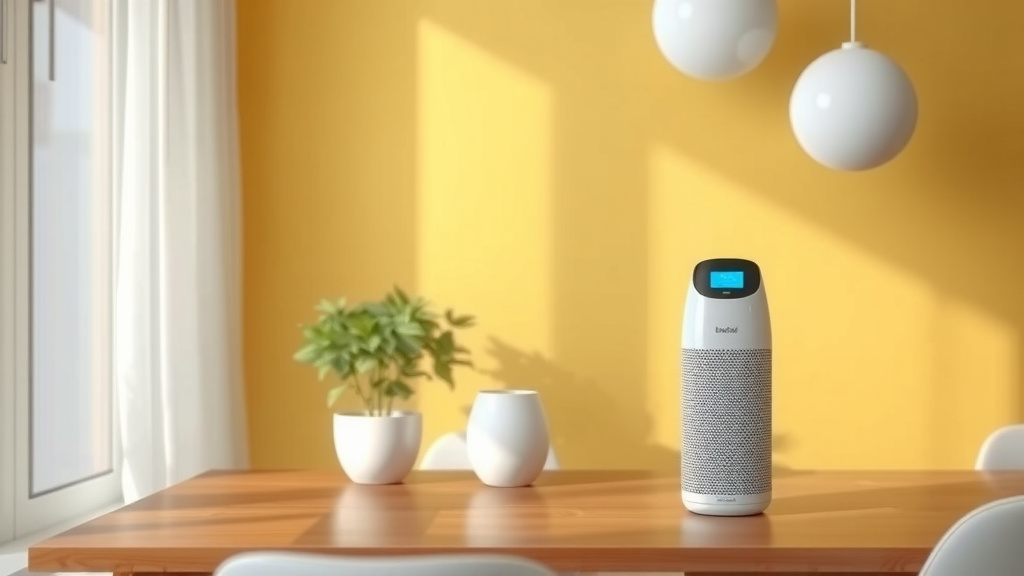
Ease of Use and Design
Blueair: Simple and Effective
Blueair units are generally known for their straightforward operation. You typically plug it in, select a fan speed, and let it run. Many models have intuitive controls and simple filter replacement processes. They come in various sizes and designs, from compact units to larger floor-standing models, allowing you to place them where needed without much fuss.
The setup is usually minimal, and the user interface is designed for ease. For most users, operating a Blueair purifier is as simple as turning on a fan. You won’t find yourself needing to consult a complex manual just to get it running.
Molekule: Modern Aesthetics
Molekule purifiers often boast a sleek, modern design that many find aesthetically pleasing. They are built to blend into home decor rather than stand out as a piece of functional equipment. The user experience is also designed to be simple, often controlled via an app or a minimalist interface on the unit itself.
App control can offer convenience, allowing you to monitor air quality and adjust settings remotely. However, if you prefer a simple, physical button to control your device, the app-centric approach might be a minor hurdle. The focus here is on a premium user experience that matches the premium price.
Making Your Decision: A Quick Checklist
To help you decide which air purifier is right for your home, consider these points:
- Budget: Do you need a more affordable upfront cost, or can you invest more?
- Primary Concern: Are you mainly worried about dust, pollen, and pet dander, or are you focused on odors and potential microscopic contaminants?
- Filter Replacement Cost: How much are you willing to spend on filters over time?
- Technology Preference: Do you prefer a proven, well-established method like HEPA, or are you interested in newer, molecular-level destruction technology?
- Space Size: What square footage do you need to cover? Both brands offer various sizes.
- Ease of Use: Do you want a plug-and-play device, or do you appreciate smart features and app control?
Conclusion
Deciding between Blueair and Molekule comes down to your priorities. If you’re looking for proven particle filtration for common allergens like dust and pollen, and want more budget-friendly options, Blueair is likely your best bet. Their HEPA technology is well-established and effective. If you’re intrigued by newer technology aiming to break down pollutants at a molecular level and don’t mind a higher price point and ongoing filter costs, Molekule offers a unique approach. Carefully consider what air quality issues you want to tackle most and what fits your budget before making your final choice.
Frequently Asked Questions
Which air purifier is better for allergies?
For allergy sufferers, Blueair generally takes the lead. Its HEPA filtration is highly effective at capturing common allergens like dust mites, pollen, and pet dander. These particles are a primary trigger for many allergy symptoms, and Blueair’s technology is specifically designed to trap them efficiently.
Is Molekule’s PECO technology scientifically proven for home use?
Molekule’s PECO technology is innovative, aiming to destroy pollutants. While Molekule presents its own research, more independent, peer-reviewed studies are needed to fully validate its broad-spectrum effectiveness against common household pollutants compared to established HEPA standards. You’ll find more widespread scientific consensus supporting HEPA for particle capture.
Which brand has lower long-term costs?
In the long run, Blueair often proves more cost-effective. While both require filter replacements, Blueair filters are typically less expensive than Molekule’s PECO filters. Blueair also offers a wider range of models at different price points, making the initial purchase more accessible for many budgets.
Can I use an air purifier in a small bedroom?
Yes, both brands offer models suitable for smaller spaces. Blueair has a variety of compact units that are perfect for bedrooms, often designed for quiet operation. Molekule also has smaller units, but they tend to come with a higher price tag, even for their more compact sizes.
What’s the main difference in how they clean the air?
The core difference lies in their technology. Blueair uses HEPA filtration, which acts like a fine sieve to trap particles like dust, pollen, and dander. Molekule uses PECO technology, which employs UV light to attempt to destroy pollutants, including gases and microorganisms, at a molecular level.