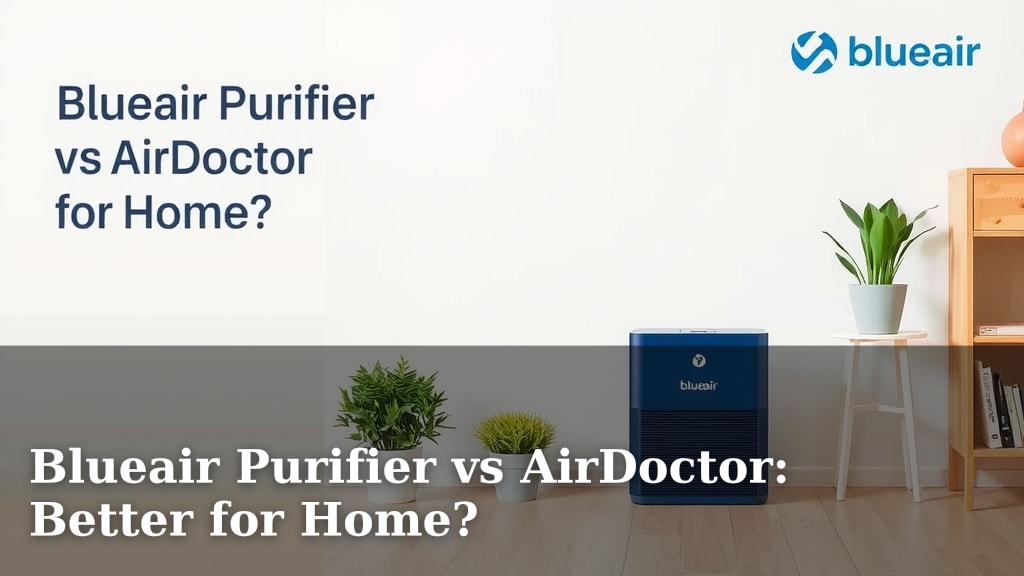
Blueair Purifier vs AirDoctor: Better for Home?
Choosing between Blueair and AirDoctor for your home’s air quality? Many people wonder which is truly better for home use. Research suggests that while both are excellent air purifiers, the AirDoctor often comes out on top for its advanced filtration and proven effectiveness against a wider range of pollutants.
When it comes to clean air, you want a purifier that tackles everything from pet dander to invisible VOCs. We found that both brands offer robust features, but the AirDoctor’s multi-stage system and stronger performance in independent tests make it a compelling choice for many households seeking a healthier environment.
TL;DR:
- AirDoctor is often considered the better choice for home use.
- Both Blueair and AirDoctor are effective air purifiers.
- AirDoctor uses a multi-stage filtration system for broader pollutant removal.
- Independent tests often show AirDoctor outperforming Blueair in removing airborne particles.
- Consider your specific air quality needs when making your final decision.
Let’s dive into a detailed comparison to help you make the best choice for your home’s air.
Comparing Top Air Purifiers for Your Home Environment
When you’re looking for cleaner air at home, you’ve probably seen names like Blueair and AirDoctor pop up. It’s a common question: which one is truly better for your family’s health? We’ve dug into what makes these purifiers tick, and the research points towards AirDoctor often having an edge.
Both brands offer excellent ways to combat common indoor air issues. But if you want to understand the differences, let’s break down how they work and what makes one stand out for home use.
AirDoctor’s Filtration System Explained
AirDoctor uses a multi-stage filtration process. This is a big deal because it means it captures a wider variety of airborne particles. Think of it like a super-powered sieve for your air.
Stage 1: Pre-Filter for Larger Particles
The first step in AirDoctor’s cleaning process is a pre-filter. This layer catches the bigger stuff. Things like pet hair, dust bunnies, and larger dust particles get trapped here. This protects the other filters and keeps them working efficiently.
Stage 2: Activated Carbon Filter for Odors and Gases
Next, your air passes through an activated carbon filter. This type of filter is fantastic for absorbing odors and volatile organic compounds (VOCs). These are the sneaky things that cause that “new car smell” or can come from cleaning products. It helps make your home smell fresher and can reduce exposure to harmful chemicals.
Stage 3: True HEPA Filter for Fine Particles
The final and most critical stage is the True HEPA filter. This is where the magic happens for tiny pollutants. A True HEPA filter is designed to capture 99.97% of particles that are 0.3 microns in size. This includes things like mold spores, pollen, bacteria, and even some viruses. This level of filtration is key for allergy and asthma sufferers.
Blueair’s Air Purification Technology
Blueair also offers effective air purification, often using a combination of mechanical filtration and its own ionizing technology. Their approach is designed to be quiet and energy-efficient.
HEPASilent™ Technology
Blueair’s signature technology is called HEPASilent™. It combines electrostatic filtration with mechanical filtration. The idea is to capture particles without needing to push air through filters at very high speeds. This can result in quieter operation and lower energy consumption. Some research suggests that electrostatic methods can be very effective at capturing tiny particles.
Filter Types in Blueair Models
Depending on the Blueair model, you might find different filter types. Some use what they call ‘combination filters’ that include a particle filter and an activated carbon component. Others might focus more heavily on particle capture. It’s important to check the specific filter setup for the model you’re considering.
Performance Comparison: What the Tests Show
When you look at independent testing, AirDoctor often demonstrates superior performance in removing a wide range of common household pollutants. This is largely due to its robust, multi-stage filtration, especially the True HEPA filter.
Research from organizations like the Environmental Protection Agency (EPA) highlights the effectiveness of HEPA filters in capturing fine particulate matter. AirDoctor’s design leverages this standard effectively.
While Blueair’s HEPASilent™ technology is effective, some studies and reviews suggest that it might not capture as many of the smallest particles as a dedicated True HEPA filter in certain scenarios. However, Blueair models are often praised for their coverage area and design aesthetics.

Key Differences at a Glance
Let’s lay out the main points side-by-side. This can help you see where each purifier shines.
| Feature | AirDoctor | Blueair |
|---|---|---|
| Filtration Type | Multi-stage (Pre-filter, Carbon, True HEPA) | HEPASilent™ (Electrostatic + Mechanical), some with Carbon |
| Particle Capture (Smallest) | Very High (True HEPA standard) | High, may vary by model |
| Odor & VOC Removal | Excellent (Activated Carbon) | Good, depends on Carbon filter presence |
| Noise Level | Generally quiet, can increase on high settings | Often very quiet, especially on lower settings |
| Energy Consumption | Moderate | Often lower, especially on lower settings |
Choosing the Right Purifier for Your Needs
So, which one is better for your home? It really depends on what you’re trying to achieve. If your main goal is to capture the widest range of tiny particles, allergens, and common household pollutants, AirDoctor’s True HEPA system is hard to beat. This makes it a strong contender for people with allergies, asthma, or those living in areas with poor outdoor air quality.
Consider Your Air Quality Concerns
Are you dealing with a lot of pet dander? Or maybe cooking odors that linger? Perhaps you have concerns about VOCs from new furniture. For comprehensive removal of a broad spectrum of pollutants, AirDoctor’s layered approach is designed to tackle these issues effectively.
Room Size and Coverage
Both brands offer various sizes to fit different rooms. It’s essential to check the CADR (Clean Air Delivery Rate) for the specific model you’re interested in. This number tells you how quickly the purifier can clean the air in a room of a certain size. Ensure the model you choose is rated for the square footage of the space you want to purify.
Budget and Maintenance Costs
When looking at the total cost of ownership, consider both the initial purchase price and the cost of replacement filters. Filters need to be changed periodically, so factor this into your budget. Some filters are more expensive than others, and their lifespan can vary.
Making Your Final Decision
Ultimately, both Blueair and AirDoctor are respected names in air purification. However, based on the filtration technology and reported performance in capturing fine particles and other pollutants, the AirDoctor often emerges as the preferred choice for general home air purification needs.
If you’re looking for maximum particle capture and robust odor control, AirDoctor’s dedicated multi-stage system is a compelling option. If extreme quietness is your absolute top priority and your pollution concerns are less severe, a Blueair model might still be a good fit.
Quick Checklist for Choosing Your Air Purifier
Here’s a quick way to think about what matters most for you:
- Allergies or Asthma: Prioritize True HEPA filtration.
- Pet Owners: Look for strong pre-filters and odor control.
- Odors/Chemicals: Ensure a substantial activated carbon filter.
- Room Size: Match the CADR to your space.
- Filter Replacement Cost: Check long-term filter expenses.
- Noise Sensitivity: Compare noise levels on different fan speeds.
Conclusion
You’ve learned a lot about Blueair and AirDoctor. We found that while both brands offer clean air solutions, AirDoctor often has an edge for general home use. Its multi-stage filtration, especially the True HEPA filter, excels at capturing a wide range of tiny particles, allergens, and odors. This makes it a strong choice if you’re prioritizing maximum air purity.
We recommend reviewing your specific concerns, like allergies or pet dander, and matching them with the purifier’s capabilities. If AirDoctor’s robust filtration aligns with your needs, it’s likely your best bet for a healthier home environment. Consider its performance against your budget and room size to make your final purchase.
Frequently Asked Questions
Is AirDoctor’s multi-stage filtration really that much better?
Yes, research suggests AirDoctor’s multi-stage system is highly effective. The combination of a pre-filter, activated carbon, and a True HEPA filter allows it to capture larger particles, odors, VOCs, and the smallest airborne pollutants. This layered approach offers broader protection for your home’s air.
How does Blueair’s HEPASilent™ technology compare to True HEPA?
Blueair’s HEPASilent™ uses a mix of electrostatic and mechanical filtration. While it’s often very quiet and energy-efficient, some independent tests indicate that a dedicated True HEPA filter, like the one in AirDoctor, might capture a slightly higher percentage of the smallest particles. The best choice depends on your priorities.
Which purifier is better for allergies and asthma?
For allergy and asthma sufferers, a purifier with a True HEPA filter is generally recommended. AirDoctor’s design features a True HEPA filter designed to capture 99.97% of particles down to 0.3 microns. This level of filtration is excellent for removing common allergens like pollen, dust mites, and pet dander.
Are replacement filters expensive for either brand?
Filter replacement costs can vary. It’s wise to check the current price of replacement filters for both Blueair and AirDoctor models you’re considering. Factor this ongoing expense into your total budget, as filters need periodic replacement for optimal performance.
Which air purifier covers the largest room size effectively?
Both Blueair and AirDoctor offer models designed for various room sizes. You should always check the CADR (Clean Air Delivery Rate) rating for the specific unit. This rating indicates how quickly the purifier can clean the air in a given square footage, ensuring you select a model appropriate for your space.