Air Purifier vs Humidifier for Dorm Room
When deciding between an air purifier and a humidifier for your dorm room, it’s important to know they serve different primary purposes. An air purifier cleans your air by removing particles like dust and allergens, while a humidifier adds moisture to dry air. You’ll want to choose based on your main concern: cleaner air or more comfortable humidity levels.
Your dorm room’s air quality and comfort depend on more than just temperature. Dry air can lead to discomfort and health issues, especially during certain seasons. Similarly, poor air quality from dust or allergens can impact your sleep and focus. Understanding the benefits of each device will help you make the best choice for your small space.
- Air purifiers target airborne particles.
- Humidifiers add moisture to dry air.
- Consider your primary need: cleaner air or better humidity.
- Both can improve dorm room comfort.
Let’s look at how each device works and which one might be the perfect fit for your dorm room needs.
Air Purifier vs. Humidifier: Which Dorm Room Essential Wins?
Choosing between an air purifier and a humidifier for your dorm room is a common dilemma. Both can seriously upgrade your living space. But they tackle different problems. Think of them like choosing between a broom and a mop. You use them for different messes, right? Your dorm room might need one, the other, or sometimes both. Let’s break down what each device does so you can make the best decision for your comfort and well-being.
What Exactly Does an Air Purifier Do?
An air purifier’s main job is to clean the air you breathe. It sucks in air and then filters out tiny particles you can’t see. This includes dust, pollen, pet dander, and even mold spores. If you or your roommate has allergies, this is a big deal. Cleaner air can mean fewer sniffles and itchy eyes. It can also help you sleep better.
How Air Purifiers Work
Most air purifiers use a fan to draw air through a filter system. The most common type is a HEPA filter. HEPA stands for High-Efficiency Particulate Air. These filters are designed to trap 99.97% of particles that are 0.3 microns in size. That’s incredibly small! Some purifiers also have activated carbon filters. These are great for removing odors from food or that questionable gym bag. They can also capture some gases and volatile organic compounds (VOCs).
Who Benefits Most from an Air Purifier?
You should consider an air purifier if you experience:
- Allergies: Pollen, dust mites, and pet dander are common triggers.
- Asthma: Cleaner air can reduce asthma flare-ups.
- Sensitivity to odors: If strong smells bother you, a purifier can help.
- General stuffiness: Sometimes the air in a dorm just feels stale.
Research from the Environmental Protection Agency (EPA) suggests that indoor air can be two to five times more polluted than outdoor air. This is often due to poor ventilation and the buildup of indoor pollutants. An air purifier helps combat this.
Understanding the Role of a Humidifier
A humidifier’s main purpose is to add moisture to the air. Dorm rooms, especially in winter or in arid climates, can get incredibly dry. Dry air can make your skin feel itchy and your throat scratchy. It can even lead to nosebleeds and make you more susceptible to colds. A humidifier combats this dryness.
How Humidifiers Add Moisture
Humidifiers work by releasing water vapor or steam into the air. There are a few main types:
- Cool Mist Humidifiers: These use a fan to blow air through a wet wick or filter. They are generally safer for dorms as they don’t involve heating water.
- Warm Mist Humidifiers: These boil water to create steam. They can feel soothing but pose a slight burn risk.
- Ultrasonic Humidifiers: These use vibrations to create a fine mist. They are quiet and efficient.
Many dorm-friendly humidifiers are compact and easy to use. They often have a small water tank that needs refilling. The goal is to maintain a healthy humidity level, typically between 30% and 50% (Mayo Clinic).
When is a Humidifier a Good Choice?
You’ll likely benefit from a humidifier if you often deal with:
- Dry skin or chapped lips.
- A sore throat or dry nasal passages.
- Static electricity shocks (you know, when you touch a doorknob and zap!).
- Waking up with a stuffy nose.
- The air feeling generally dry and uncomfortable.
Dry air can also affect your focus and sleep quality. Making your dorm room more comfortable can definitely help you do better in your studies.
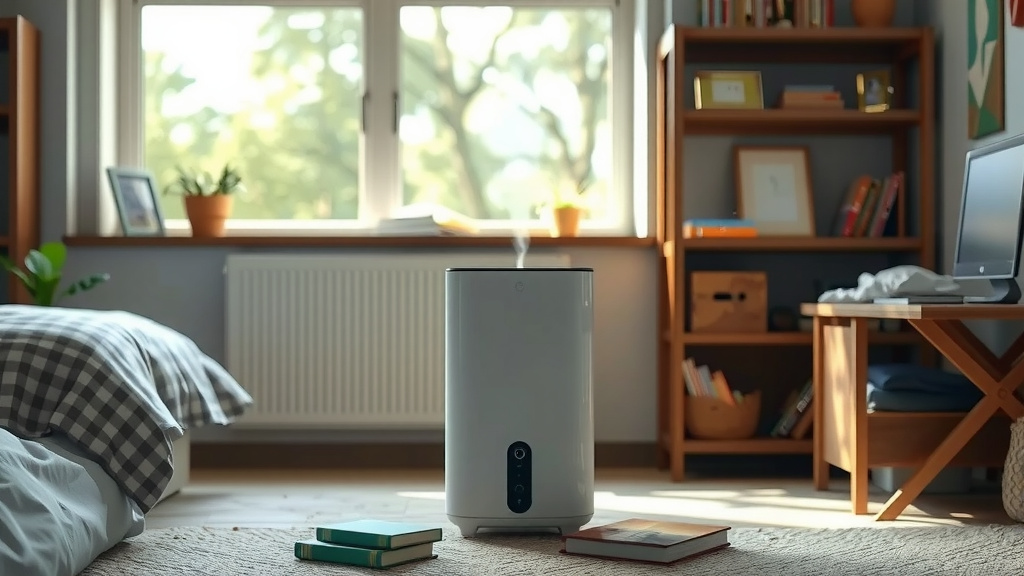
Air Purifier vs. Humidifier: Key Differences at a Glance
Here’s a simple comparison to help you see the distinct roles:
| Feature | Air Purifier | Humidifier |
|---|---|---|
| Primary Function | Removes airborne particles (dust, allergens, etc.) | Adds moisture to dry air |
| Main Benefit | Cleaner air, allergy relief, odor reduction | Comfortable humidity, relief from dryness |
| Addresses | Pollutants, irritants, smells | Dryness, scratchy throat, static electricity |
| Common Filter | HEPA filter, activated carbon | Wick, or no filter for steam/ultrasonic |
Making the Right Choice for Your Dorm
So, which one is right for you? It really depends on your biggest issue. Do you have allergies or is your roommate’s cooking scent lingering a bit too long? An air purifier might be your best bet. Think about what bothers you most in your dorm room environment.
Consider Your Specific Dorm Situation
Ask yourself these questions:
- Does the air in your dorm feel consistently dry, especially in certain seasons?
- Do you often wake up with a dry throat or stuffy nose?
- Are you or your roommate dealing with allergies or asthma symptoms?
- Is there a persistent unpleasant odor that ventilation doesn’t seem to fix?
- Is there a lot of dust settling quickly?
Based on your answers, you can lean towards one device over the other. If you’re really struggling with both dry air and allergens, you might even consider getting both. Many small, affordable models exist that are perfect for dorm rooms.
A Quick Checklist for Your Decision:
To make it super clear, here’s a simple rundown:
- If you sneeze a lot: Get an air purifier.
- If your skin feels tight: Get a humidifier.
- If your throat is always dry: Consider a humidifier.
- If you notice dust buildup quickly: An air purifier is likely better.
- If odors are a big problem: Look for an air purifier with carbon filters.
- If winter makes breathing difficult: A humidifier might be your new best friend.
Conclusion
Deciding between an air purifier and a humidifier for your dorm room boils down to your specific needs. If allergies, dust, or odors are your main concern, an air purifier will likely offer the most relief by cleaning the air. If you struggle with dry skin, scratchy throats, or that annoying static shock, a humidifier is probably what you need to add comforting moisture. Consider your personal comfort and health triggers. Sometimes, both devices can even work together to create a truly ideal dorm environment, so don’t rule out the possibility of getting both if your budget allows. Take a moment to assess your dorm room’s air quality and choose the device that will make your space feel best for you.
Frequently Asked Questions
Can I use an air purifier and a humidifier in my dorm room at the same time?
Yes, you absolutely can use both an air purifier and a humidifier simultaneously. They address different air quality issues – one cleans, the other adds moisture. Many students find that running both devices creates the most comfortable and healthy dorm environment, especially during dry winter months.
How often do I need to refill a humidifier in a dorm room?
The refill frequency for a humidifier depends on its size and the humidity level you set. Smaller dorm-sized humidifiers might need refilling daily or every other day. It’s best to check the water level regularly and refill it when it gets low to ensure it’s always working effectively.
What kind of maintenance do dorm humidifiers require?
Most humidifiers require regular cleaning to prevent mold and mineral buildup. You should empty and wipe down the tank and base every few days. Descaling with vinegar or a specialized cleaner periodically also helps keep it running smoothly and efficiently.
Are air purifiers noisy for a small dorm room?
Air purifier noise levels vary by model and fan speed. Many compact dorm-friendly purifiers are designed to be relatively quiet, often operating at a low hum on their lowest settings. Some even have a “sleep mode” for quieter operation at night.
Will an air purifier help with cigarette smoke from a roommate?
An air purifier with an activated carbon filter can help reduce odors from cigarette smoke. While it won’t eliminate all traces, it can significantly improve the air quality by absorbing some of the odor-causing particles. Good ventilation is also key, but a purifier can offer additional help.