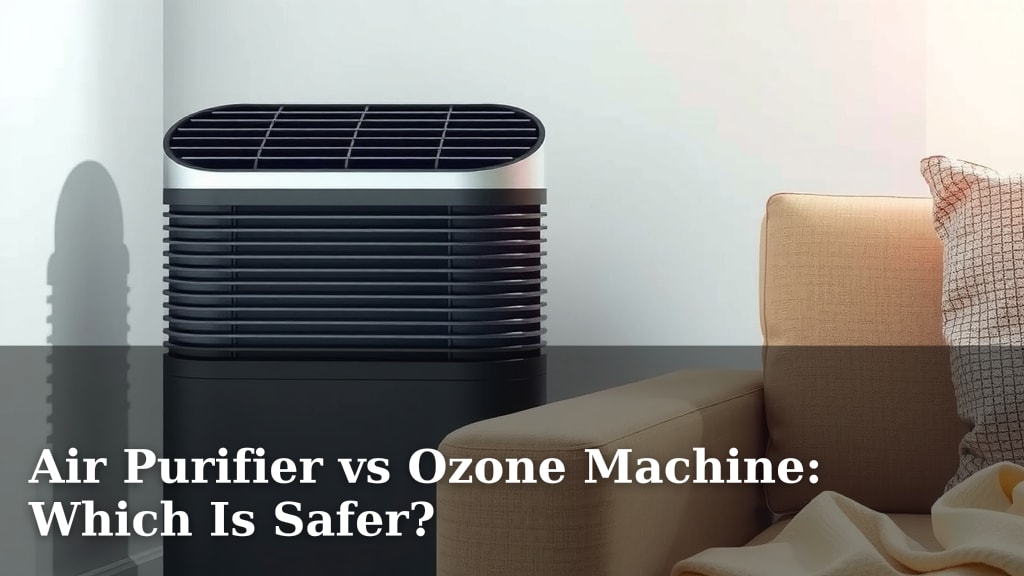
Air Purifier vs Ozone Machine: Which Is Safer?
When you’re looking to clean your air, it’s easy to get confused between an air purifier and an ozone machine. To answer your main question directly: **air purifiers are generally safe for continuous use**, while **ozone machines can be unsafe if not used properly**. We found that the key difference lies in how they clean the air and the byproducts they create. For everyday use in occupied spaces, an air purifier is the much safer choice.
Many people want to know the best way to tackle indoor air quality. While both devices aim to improve your air, they do so very differently. Research shows that ozone machines produce ozone gas, which can be harmful to your lungs and respiratory system. Air purifiers, on the other hand, typically use filters to trap pollutants, making them a **safer, more consistent option for breathing clean air** all the time.
- Air purifiers are generally safe for occupied rooms.
- Ozone machines can produce harmful levels of ozone gas.
- Always use ozone machines in unoccupied spaces.
- Air purifiers trap pollutants; ozone machines create a chemical reaction.
- For daily air cleaning, stick with an air purifier.
Let’s break down the specifics of each to help you make the best choice for your home and health.
So, you’re looking to breathe a little easier at home. That’s a smart move! Indoor air quality matters more than we often think. You might have heard about air purifiers and ozone machines as ways to clean your air. But how do they stack up against each other? And more importantly, which one is safe to use around your family and pets? We’ve dug into the details, and here’s what we found to help you choose.
Understanding Air Purifiers vs. Ozone Machines
The core difference between these two devices boils down to how they clean your air. One traps pollutants, and the other aims to neutralize them by creating a reactive gas. It’s a big distinction when it comes to safety, especially for everyday use.
How Air Purifiers Work
Think of an air purifier like a high-tech vacuum cleaner for your air. They suck in the air around you. Then, they pass it through a series of filters. These filters are designed to capture tiny particles. We’re talking about things like dust, pollen, pet dander, and even some smoke particles. The cleaner air is then released back into your room. Many popular models use HEPA filters. These are **extremely effective at trapping very small particles**.
Types of Air Purifier Filters
Most air purifiers use a combination of filters. A pre-filter often catches larger debris, like pet hair. This helps extend the life of the main filters. Then, a HEPA filter traps the microscopic stuff. Many also include an activated carbon filter. This is great for **absorbing odors and gases**, like those from cooking or cleaning supplies. Some advanced models might have UV-C light or ionization, but the core cleaning usually comes from filtration.
How Ozone Machines Work
Ozone machines operate very differently. Instead of trapping particles, they produce ozone gas (O3). This gas is a powerful oxidizer. The idea is that ozone will react with and break down pollutants in the air. This includes things like odors, mold spores, and bacteria. However, this process involves a chemical reaction. Research shows that ozone itself can be a **lung irritant** when inhaled. It’s what we call a **secondary pollutant**.
The Ozone Production Process
Ozone machines typically use either a corona discharge or UV light to create ozone. Corona discharge is like a mini lightning bolt. It splits oxygen molecules (O2) in the air. These single oxygen atoms then combine with other O2 molecules to form O3. UV light does something similar. The ozone produced is then released into the air. The goal is for it to neutralize contaminants. But, if too much ozone builds up, it can become a problem. **Health organizations like the EPA warn about ozone’s effects**.
Safety First: Air Purifier vs. Ozone Machine
This is where the rubber meets the road. When you’re deciding between these two, your health and safety should be top priorities. We found that the general consensus among health and environmental agencies leans heavily towards air purifiers for occupied spaces.
Air Purifier Safety for Everyday Use
Air purifiers are designed with your living space in mind. They continuously clean the air while you’re in the room. The filtration process doesn’t create harmful byproducts. You can run them all day, every day, without worry. They are a **passive way to improve air quality**. Think of it like having a clean room that stays clean. You don’t need to leave the room or take special precautions.
Ozone Machine Safety: The Big Concerns
Ozone machines come with significant safety warnings. The U.S. Environmental Protection Agency (EPA) states that ozone is **harmful to breathe**. Even at low levels, it can irritate your lungs and throat. It can also worsen conditions like asthma and emphysema. Because of this, ozone machines should **only be used in unoccupied spaces**. You must leave the area completely while the machine is running. Then, you need to let the ozone dissipate. This usually means airing out the room thoroughly before re-entering. Many manufacturers provide specific instructions for safe operation, but the risk remains.
When Are Ozone Machines Recommended?
Despite the risks for occupied spaces, ozone machines do have specific, limited uses. They are sometimes recommended by professionals for deep cleaning. This can include tackling stubborn odors after fires or floods. Or, it might be used to help kill mold in unoccupied, sealed areas. In these situations, the space is completely vacated. **Trained professionals often oversee their use**. For your home, for daily air cleaning, they are generally not the right tool.
Effectiveness and Limitations
Both devices aim to make your air cleaner, but their effectiveness and what they can achieve differ greatly. Understanding these differences will help you manage your expectations.
What Air Purifiers Excel At
Air purifiers are champions at removing particulate matter. This includes allergens like pollen and dust mites. They are also great for reducing smoke particles from cooking or wildfires. The carbon filters help tackle common household odors. For people with allergies or respiratory sensitivities, a good air purifier can offer **noticeable relief**. Their continuous operation means a steady improvement in air quality. You get consistent benefits without extra effort.
What Ozone Machines Claim to Do (and Where They Fall Short for You)**
Ozone machines claim to break down a wide range of contaminants. They can be effective at eliminating strong odors. They might also reduce certain types of bacteria and viruses. However, studies have shown that ozone is **not very effective at removing common indoor air pollutants**. Things like VOCs (volatile organic compounds) are often only partially reacted, or the reaction creates other harmful byproducts. Furthermore, the levels of ozone needed to be effective against some contaminants may exceed safe breathing limits. This brings us back to the safety issue. It’s a trade-off that often isn’t worth it for home use.
Making the Right Choice for Your Home
Deciding between an air purifier and an ozone machine really comes down to your needs. Think about your daily life and what you want to achieve. For most homes, the answer is clear.
Choosing an Air Purifier: The Smart, Safe Bet
If you want to consistently improve the air quality in rooms where you live, work, and sleep, an air purifier is your best friend. They are safe, effective for common pollutants, and easy to use. You simply plug them in, turn them on, and let them do their job. Regular filter changes are the main maintenance. We found that **HEPA filters are key for capturing allergens and fine dust**. For peace of mind and continuous air cleaning, air purifiers win hands down.
When NOT to Use an Ozone Machine in Your Home
Unless you are a professional dealing with a specific, severe contamination issue in an *unoccupied* space, you should avoid using ozone machines in your home. The risk of overexposure and the potential for respiratory harm are too high for everyday use. The “cleaning” power of ozone comes with a **significant health cost if not handled with extreme caution**. It’s simply not designed for the living spaces you share with your family and pets.
Here’s a quick checklist to help you remember the key differences:
- Air Purifier: Traps particles. Safe for occupied rooms. Continuous use.
- Ozone Machine: Produces ozone gas. Unsafe for occupied rooms. For unoccupied spaces only.
- Primary Goal: Air purifier = cleaner air for breathing. Ozone machine = chemical reaction to neutralize.
- Safety Focus: Air purifiers prioritize occupant safety. Ozone machines require strict safety protocols.
- Daily Use: Air purifiers are ideal. Ozone machines are not recommended.
- Consider Your Needs: For everyday air improvement, choose an air purifier.
Conclusion
After looking at how air purifiers and ozone machines work, it’s clear which one is best for your home’s everyday air quality. Air purifiers safely trap particles like dust and allergens using filters. You can run them all day while you’re in the room. Ozone machines produce ozone gas, which is harmful to breathe. They should only be used in empty spaces for specific deep cleaning jobs. For consistent, safe air cleaning where you live and sleep, air purifiers are the clear winner. Make the smart choice for your health and choose an air purifier for your home.
Frequently Asked Questions
Can I run an air purifier continuously?
Yes, you can run most air purifiers continuously. They are designed for long-term use in occupied rooms. Their filtration process doesn’t create harmful byproducts, so they are safe to use all day and night.
Is ozone safe for pets?
No, ozone is not safe for pets. Like humans, pets have respiratory systems that can be harmed by ozone gas. You must remove pets from any area where an ozone machine is in operation.
How long should I wait to re-enter a room after using an ozone machine?
After using an ozone machine, you must ventilate the room thoroughly before re-entering. Wait at least a few hours, or until the area is completely aired out and the ozone smell is gone. Always follow the manufacturer’s specific instructions for safe waiting times.
Do air purifiers produce ozone?
Most standard air purifiers that use HEPA and carbon filters do not produce ozone. Some older or specialized air purifiers might use ionization or UV light. These can sometimes produce very small amounts of ozone. Look for ozone-free certifications if this is a concern for you.
When is an ozone machine actually useful for a homeowner?
Ozone machines are rarely recommended for typical home use. They might be considered by professionals for severe odor removal after events like fires or floods in unoccupied, sealed spaces. For day-to-day air cleaning, they are not suitable or safe for occupied areas.