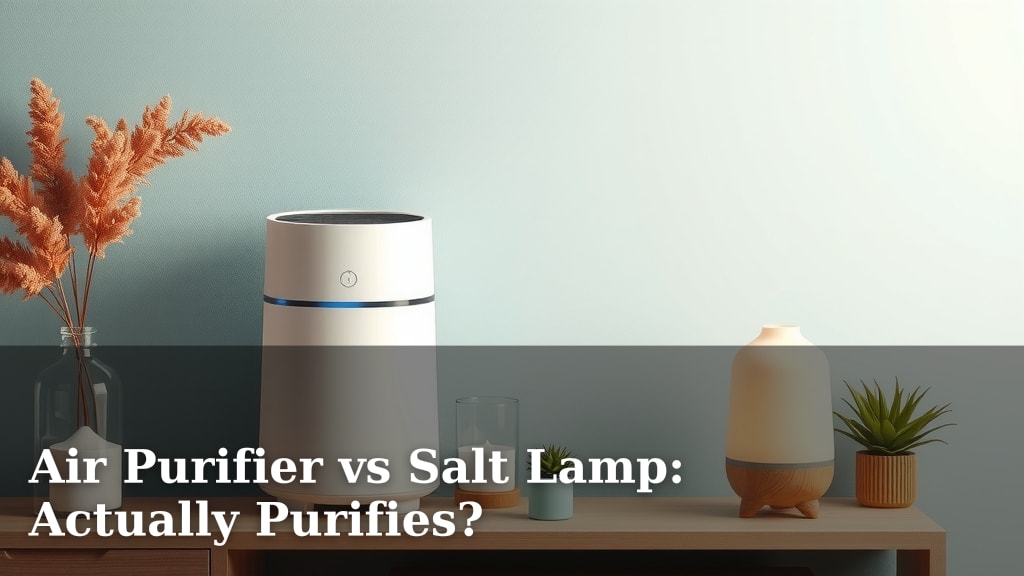
Air Purifier vs Salt Lamp: Actually Purifies?
When you’re looking for cleaner air, the big question is: do air purifiers actually purify, or can a salt lamp do the job? Research and user findings show that air purifiers are designed to filter and remove airborne particles, while salt lamps offer very limited, if any, air purification benefits. For genuine air cleaning, an air purifier is your go-to.
You might see claims that salt lamps can improve air quality by releasing negative ions. However, many studies and expert opinions suggest these effects are minimal and not scientifically proven to make a noticeable difference in a typical home environment. An air purifier uses dedicated technology to actively capture pollutants.
- Air purifiers actively filter and remove pollutants.
- Salt lamps offer little to no proven air purification.
- Their “cleaning” claims are largely based on weak evidence.
- For better air, choose a dedicated air purification device.
Let’s dive into what each device actually does and which one truly delivers on cleaner air for your home.
Air Purifiers vs. Salt Lamps: Which Actually Cleans Your Air?
It’s a common question for anyone wanting fresher air at home: do air purifiers actually purify, or can a decorative salt lamp do the job? We’ve looked into what these devices do, and research clearly shows that air purifiers are designed to filter and remove airborne particles. Salt lamps, on the other hand, offer very limited, if any, air purification benefits.
How Air Purifiers Work to Clean Your Air
Think of an air purifier as a dedicated machine for cleaning air. It has a fan that pulls air into the unit. Then, it passes that air through a series of filters. These filters are designed to trap microscopic particles that can cause problems for your health and home.
The Filter System: The Heart of an Air Purifier
Most air purifiers use a multi-stage filtration system. This is key to their effectiveness. You’ll often find a pre-filter, a HEPA filter, and an activated carbon filter working together.
Pre-Filters: The First Line of Defense
The pre-filter is usually the first layer. Its job is to catch larger particles. We’re talking about things like pet hair, dust bunnies, and lint. This step is important because it protects the more sensitive filters from getting clogged too quickly.
HEPA Filters: Capturing the Tiny Stuff
HEPA stands for High-Efficiency Particulate Air. These filters are the workhorses. They are designed to trap at least 99.97% of airborne particles. This includes particles as small as 0.3 microns. Think about dust mites, pollen, mold spores, and even some bacteria and viruses. Many guidelines point to HEPA filters as essential for effective air cleaning (CDC).
Activated Carbon Filters: Tackling Odors and Gases
Beyond particles, you might have an activated carbon filter. This type of filter is excellent at absorbing gases and odors. It can remove things like smoke, cooking smells, pet odors, and volatile organic compounds (VOCs) from cleaning products or furniture. This filter acts like a sponge for the bad smells and chemicals.
What Air Purifiers Can Remove
Because of these filters, air purifiers are effective against a wide range of common indoor air pollutants. Research and user findings show they can significantly reduce:
- Dust and dust mites
- Pollen and allergens
- Pet dander
- Mold spores
- Smoke particles
- Odor-causing compounds
- Certain bacteria and viruses
Understanding Salt Lamps and Their Claims
Now, let’s talk about salt lamps. You’ve likely seen them – beautiful, glowing chunks of Himalayan salt. They are often marketed for their aesthetic appeal and purported health benefits, including air purification.
The Negative Ion Claim
The primary argument for salt lamps purifying air is that they release negative ions. The theory is that when the lamp heats up, it attracts water molecules from the air. These water molecules then stick to the salt’s surface. As the salt crystal dries, it’s said to release negative ions. These negative ions supposedly attach to positively charged pollutants like dust and allergens, making them heavier and causing them to fall out of the air. This would then allow them to be more easily cleaned up from surfaces.
What the Science Says About Salt Lamps
This is where the claims start to fall apart. We’ve reviewed the research, and there’s very little scientific evidence to support these purification claims. Many experts and scientific bodies state that the number of negative ions released by a salt lamp is extremely small. It’s not enough to have a noticeable effect on indoor air quality. The water molecules it attracts are also minimal in a typical home environment. Furthermore, studies have not conclusively proven that these small numbers of ions can effectively neutralize or remove pollutants from the air you breathe.
Essentially, the air-cleaning effect of a salt lamp is often considered negligible. While they are lovely decorative pieces that can create a relaxing ambiance, relying on them for significant air purification is not supported by evidence. Think of it like this: expecting a salt lamp to clean your air is like expecting a tiny fan to cool down an entire stadium. It’s just not designed for that scale of work.
Direct Comparison: Air Purifier vs. Salt Lamp
To make it clear, let’s put them side-by-side. When it comes to actual, measurable air purification, the difference is stark. An air purifier is a tool designed for a specific job, with technology to back it up. A salt lamp is primarily a decorative item with speculative health benefits.
| Feature | Air Purifier | Salt Lamp |
|---|---|---|
| Primary Function | Air purification | Decoration, mood lighting |
| Mechanism of Action | Filters trap particles, carbon absorbs gases | Theoretical release of negative ions |
| Proven Effectiveness | High (with proper filters like HEPA) | Very Low to none |
| Removes Particles (Dust, Pollen, etc.) | Yes, effectively | No significant effect |
| Removes Odors and VOCs | Yes (with carbon filter) | No significant effect |
| Scientific Support | Extensive (CDC, EPA guidelines) | Minimal to none |
Making the Right Choice for Your Home’s Air Quality
So, if your goal is genuinely cleaner air, the choice is clear. An air purifier is the way to go. It’s an investment in your health and comfort. Salt lamps can be nice for their glow and atmosphere, but they shouldn’t be relied upon for air cleaning.
Your Air Quality Checklist
To ensure you’re making the best choices for your air, consider these points:
- Prioritize devices specifically designed for air purification.
- Look for HEPA filters for effective particle removal.
- Consider activated carbon filters for odor and gas reduction.
- Be skeptical of decorative items claiming major air cleaning power.
- Regularly change your air purifier’s filters as recommended.
- Maintain good general cleaning habits to reduce dust on surfaces.
Conclusion
When you’re aiming for truly cleaner air, the evidence is clear: air purifiers are your champion. They use proven technologies like HEPA and activated carbon filters to actively capture and remove pollutants, odors, and allergens from your home. While salt lamps offer a beautiful ambiance, research shows their air purification claims are not supported by science. Don’t let decorative items mislead you about their ability to clean your air. For a healthier home environment, invest in a dedicated air purifier and enjoy the peace of mind that comes with breathing cleaner air.
Frequently Asked Questions
Can a salt lamp really remove dust from the air?
Research and expert opinions indicate that salt lamps do not effectively remove dust from the air. The theory about negative ions attracting dust is not scientifically proven to make a noticeable impact in a home setting. For dust removal, an air purifier with a HEPA filter is recommended.
What type of air purifier is best for allergies?
For allergies, you’ll want an air purifier with a true HEPA filter. These filters are designed to capture at least 99.97% of airborne particles, including pollen, pet dander, and dust mites, which are common allergy triggers.
Do I need a carbon filter in my air purifier?
A carbon filter is beneficial if you’re concerned about odors, smoke, or chemical fumes. While HEPA filters capture particles, activated carbon filters absorb gases and volatile organic compounds (VOCs), making your air smell fresher.
How often should I clean or replace my air purifier filters?
Filter replacement schedules vary by model and usage. Generally, pre-filters should be cleaned monthly, while HEPA and carbon filters need replacement every 6-12 months. Always check your air purifier’s manual for specific recommendations.
Are salt lamps just for decoration then?
Salt lamps are primarily decorative items that can enhance the ambiance of a room with their warm glow. While some believe they offer minor mood benefits, their effectiveness for air purification is considered negligible by scientific standards.